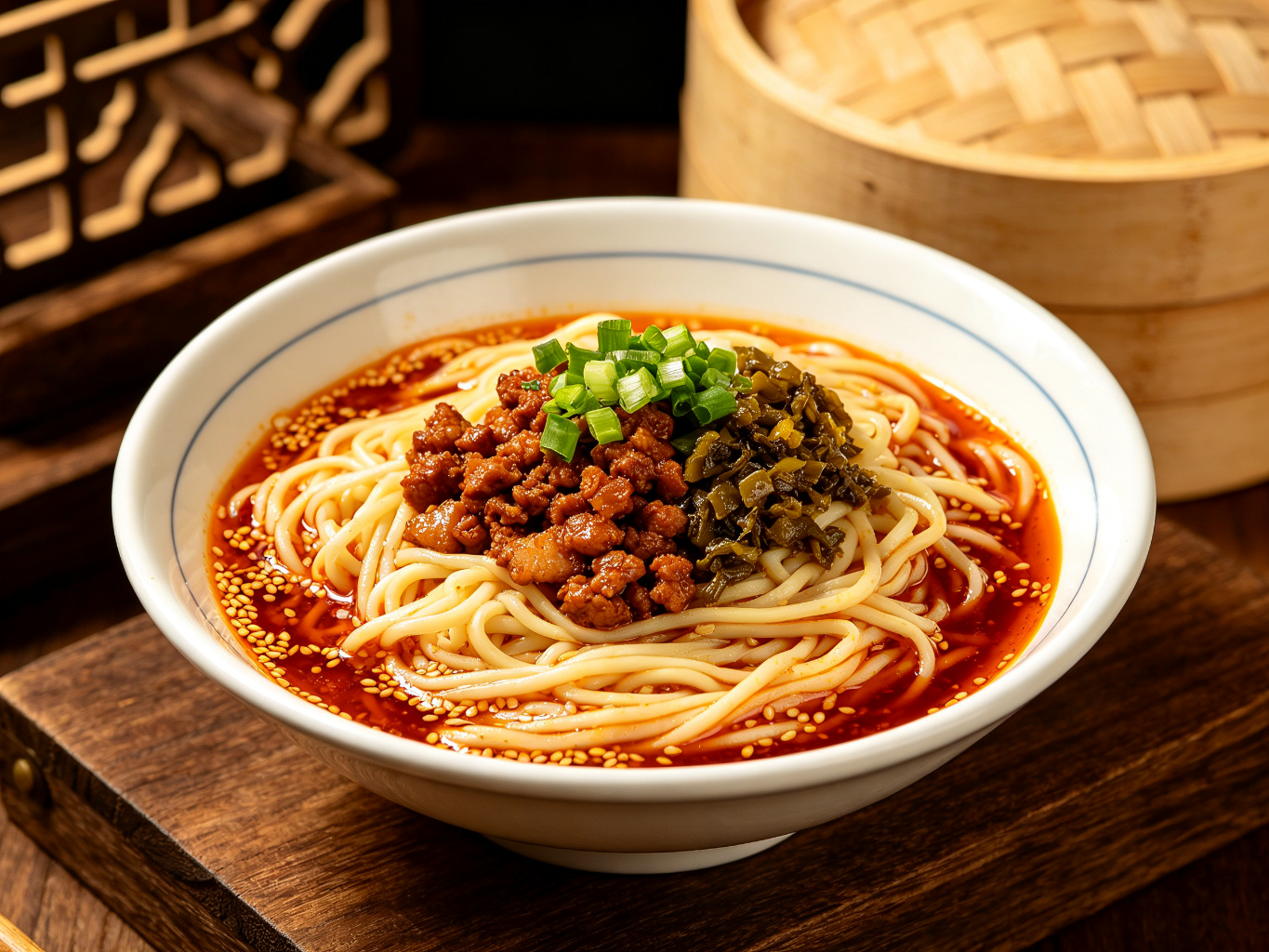
Dan dan noodles (担担面, dāndān miàn) take their name from the bamboo shoulder pole, the dan, that Qing dynasty street vendors slung across their backs to hawk bowls of noodles through the lanes. The story says a vendor named Chen Baobao began selling the dish in the 1840s near Chengdu's northern wharf; hungry coolers would pay a few coins for a small, intensely flavored bowl that woke them up after a morning's work. Today dan dan noodles appear on menus worldwide, but the original Chengdu bowl is smaller, drier and more aggressively flavored than its overseas cousins.
What is actually in the bowl
At the bottom of the bowl hides a sauce that should never be stirred prematurely. It includes sesame paste, chili oil, chili flakes, soy sauce, black vinegar, a pinch of sugar, garlic and a little chicken stock. Above it rest thin wheat noodles, blanched just right and still firm. The crown is a pile of browned, crisply fried minced pork and a heaped spoon of yacai (芽菜, preserved mustard greens from Yibin), with a sprinkle of scallion. The art is mixing everything at the table so every strand is coated in the glossy, nutty, gently numbing dressing. Some versions add a spoon of chili-oil pea paste, but the classic stays clean and savory.
How to order
In a Chengdu noodle shop, noodles come in small (2 liǎng, about 100g) and large (3 liǎng, 150g) sizes. Start with 2 liǎng; locals often order one dry dan dan noodles and a small soup as a pair. The Chinese to remember is: dāndān miàn, liǎng gè èr liǎng ("two small dan dan noodles"). Add a fried egg (煎蛋, jiāndàn) if you are hungry.
Practical Information
- Address: look for tiny noodle shops with plastic stools in the alleys behind Kuanzhai Alley, around Yulin West Road and near universities along Yihuan Road.
- Transport: Metro Line 4 to Kuanzhaixiangzi; Line 1 to Jinianqiao for the old town lanes.
- Opening Hours: most morning stalls open 06:30–14:00; a few stay open to late afternoon.
- Cost: ¥10–18 for a small bowl; ¥15–25 for a large one.
- Tips: stir vigorously the moment the bowl arrives. If you cannot handle spice, ask for shao la (少辣, less chili).
Foreign diner tips
Dan dan noodles are not soupy; do not expect broth. The dish is intentionally dense and oily, which is why locals pair it with a bowl of warm broth (原汤, yuántāng). Bring small bills; tiny stalls rarely accept cards. Sit on the plastic stool, slurping is encouraged, and finish the bowl in five minutes — this is street fast food, not a sit-down dinner.
Pairings, Drinks and Table Etiquette
Chengdu meals almost always begin with tea. A pot of strong green tea (绿茶, lǜchá) or jasmine tea (茉莉花茶, mòlìhuāchá) clears the palate between spicy bites. Locals also order cold Yanjing beer (燕京啤酒, Yānjīng píjiǔ) or sugarcane juice (甘蔗汁, gānzhezhī) to round out the heat. When the bill arrives, watch how locals pay: the person who organized the meal usually insists, and gentle pushing of the receipt back and forth is part of the ritual, not a quarrel. If you are a guest, let your host pay; if you invited, claim the bill with a smile. Always wipe your chopsticks on the hot towel (热手巾, rè shǒujīn) before eating, and never plant chopsticks upright in the rice bowl—it resembles incense offered to the dead. If a dish is too spicy, do not reach for water; ask for the free iced sour-plum drink (酸梅汤, suānméitāng) or a bowl of plain rice. Chengdu is informal by Chinese standards: slurping, loud chatter and second helpings are all signs of a happy table.