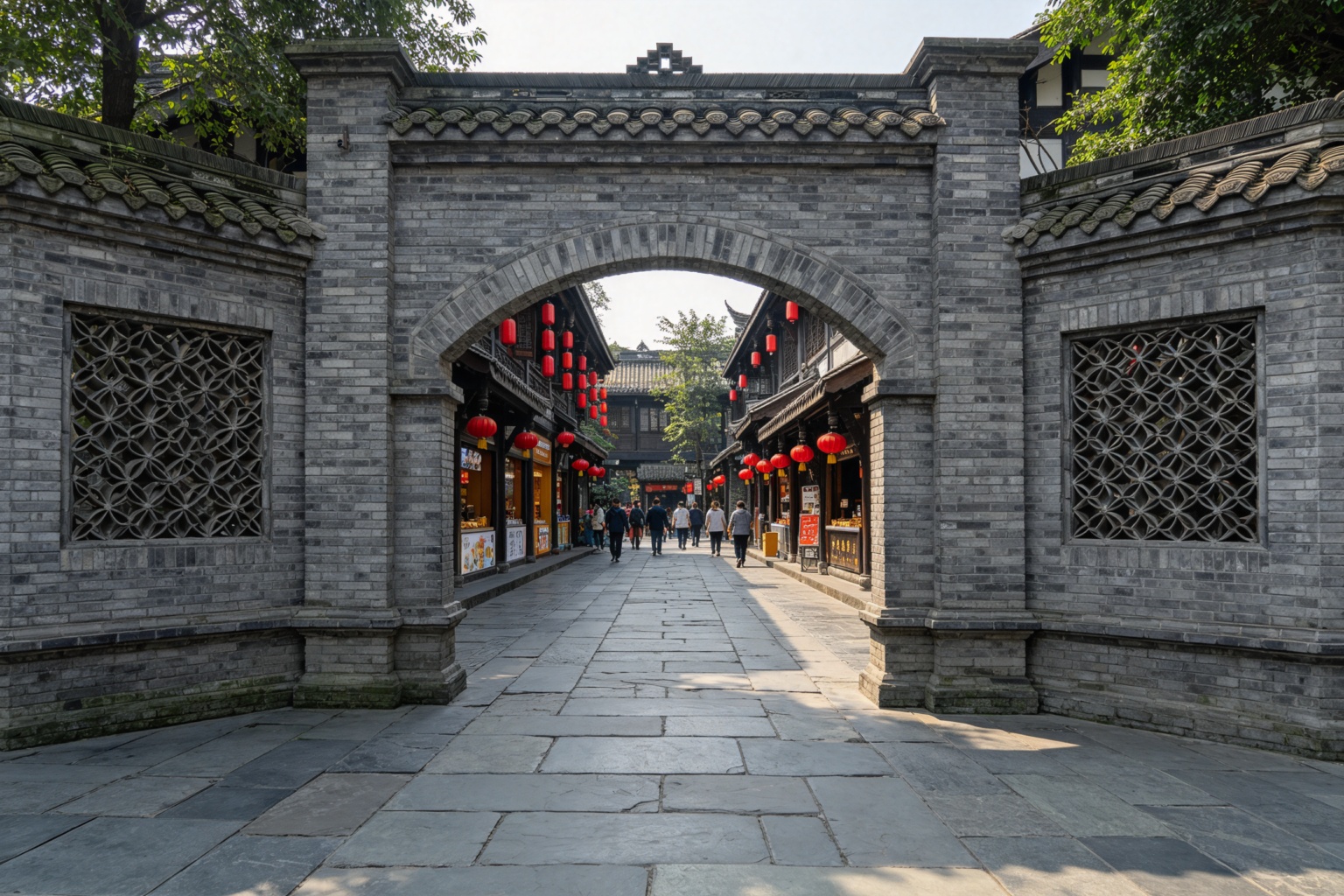
The best-known historic street in Chengdu is Kuanzhai Alleys (宽窄巷子, Kuānzhǎi Xiàngzi): three parallel lanes of gray-brick courtyards, red lanterns, teahouses and souvenir shops. Tourists photograph it, eat there and leave. Fewer realize that these lanes were laid out as a walled military town: the Manchu garrison of Chengdu, built for the soldiers who conquered China in 1644.
The birth of Shaocheng
After the Qing dynasty took power, the Kangxi emperor sent garrison troops to hold the southwest. Around 1718 a separate walled city was built inside west Chengdu: the Manchu City, also called Shaocheng (少城, "Minor City"). Manchu bannermen and their families lived inside; Chinese civilians lived outside. The three lanes — Wide Lane (宽巷子), Narrow Lane (窄巷子) and Well Lane (井巷子) — were the barracks grid. For two centuries it was a self-contained military neighborhood.
How it became a tourist street
- After the empire fell in 1912, the walls came down and the courtyards filled with ordinary Chengdu families.
- By the 2000s the lanes had decayed. In a celebrated restoration, the courtyards were rebuilt in the original gray-brick style, and Kuanzhai reopened as a historic quarter in 2008.
- Today Wide Lane is laid-back and old-style, Narrow Lane is upscale and dining-oriented, and Well Lane is an open-air mural and food strip.
What to do there
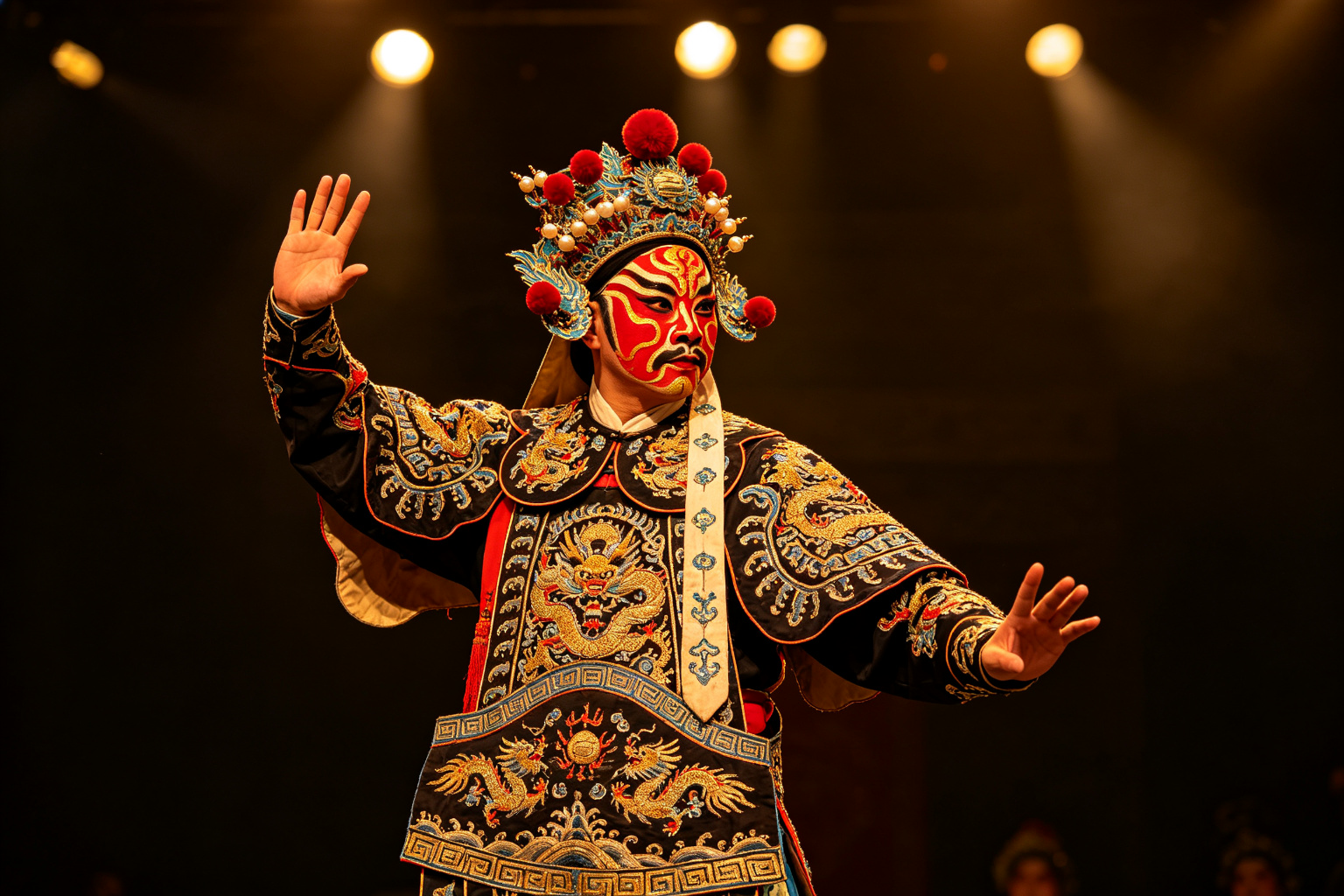
Wander slowly. Watch sugar blown into animals, have tea in a courtyard, sit for a face-changing mini-show, and buy a box of traditional pastries. Come at dusk: the lanterns come on, the crowds thin, and the lanes feel like old Chengdu again.
Beyond the souvenir shops
Kuanzhai Alleys today is a polished tourist street, but the reason to stand here is the century beneath it. This was the Manchu garrison quarter, walled off in the eighteenth century, where bannermen and their families lived, drilled and worshipped according to their own customs. The wooden gates, the quiet lanes between courtyard houses, and the uniform width of the streets all recall that military layout. Read the shops as a thin modern skin over a much older grid.
To feel the place rather than photograph it, arrive at opening time before the crowds, or return in the evening when the lanterns come on. Skip the chain restaurants on the main lane; turn into the narrow branches where locals still buy tea and repair bicycles. A street-side massage or a bowl of noodles taken slowly will tell you more about old Chengdu than any souvenir.
Practical information
- Address: Kuanzhai Alleys, Qingyang District (青羊区宽窄巷子), central Chengdu
- Transport: Metro Line 4 to Kuanzhai Alley Station (宽窄巷子站), Exit B, direct into the lanes
- Opening hours: the streets are open all day; most shops and tea houses run 10:00-22:00
- Cost: free entry; food and tea 30-150 RMB depending on where you sit
- Tips: Arrive before 10:00 to avoid the crowds. It is pretty but touristy, so treat it as a pleasant stroll, not a living museum. Eat at the smaller stalls, not the front-facing restaurants.
Behind the lanterns and the souvenirs lies a Manchu military town from 1718. Read it that way, and Kuanzhai becomes a chapter in Chinese history, not just a photo.