When the Ming dynasty (1368-1644) took China, its emperor sent his tenth son to Sichuan as the Prince of Shu, ruling the southwest from Chengdu. For 260 years the Ming princes of Shu were buried in a hilly belt east of the capital. Today that belt is the Ming Shu Royal Mausoleums (明蜀王陵, Míng Shǔ Wáng Líng), one of the best-preserved groups of princely tombs outside Beijing.
What makes them special
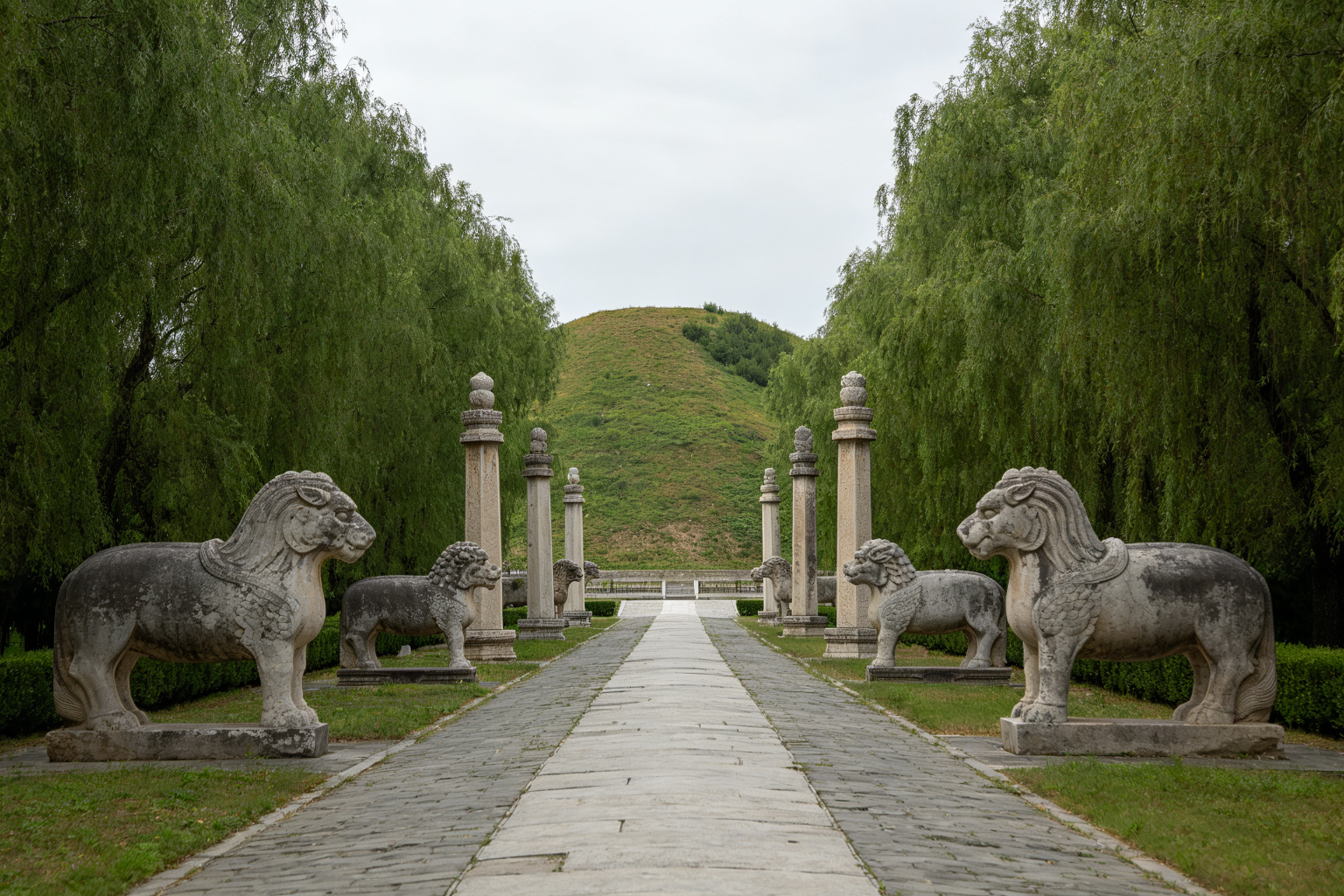
Each mausoleum follows a strict Confucian layout: a spirit way lined with stone animals and officials, a memorial gate, offering halls, and a sealed underground palace of brick and stone. The tombs were built for princes, not the emperor, but they borrow the grand imperial formula on a smaller scale. Several have been opened, letting visitors descend into vaulted chambers still decorated with carved doors and painted designs. The most famous is the tomb of Prince Xian of Shu (蜀僖王).
How it feels today
Unlike Beijing's Ming Tombs, which are crowded, the Chengdu Shu mausoleums sit in a quiet, green, almost empty landscape of willows and burial mounds. Local people walk their dogs among the stone horses. It is the perfect place to understand how a dynasty buried its elite — a city of the dead on the edge of the living one.
What to see
- Stone statues along the spirit way: horses, elephants, warriors and officials standing watch for centuries.
- The opened underground palace, with its arched brick vaults and carved stone doors.
- The wooded burial mounds that mark the still-unopened tombs of other princes.
A Ming royal tomb in the hills
Most visitors never make it out to the Eastern Hills, and that is exactly why you should. The Ming dynasty Shu princes were buried in a network of tombs laid out like a miniature imperial cemetery, with spirit roads lined by stone animals and officials. Wandering between the tumuli on a clear day gives you the rare feeling of walking inside a painting, far from the city's noise. Several tombs can be entered, and the cool brick chambers make a fine contrast to the bright slope outside.
Bring water and a hat; the site is spread out and partly unshaded. A taxi or ride-hailing car is the practical way, since public transport is sparse. Combine the visit with lunch in a nearby farmhouse restaurant where the cooking leans simple and local. If you see only one tomb, choose the largest, where the spirit road is best preserved.
Practical information
- Location: eastern suburbs of Chengdu, near the Shiling/Shilingpu area, Longquanyi District (龙泉驿区十陵一带), east of the city
- Transport: least convenient by metro; take Metro Line 4 east toward the university east campus, then a taxi or local bus to the tomb park; allow half a day
- Opening hours: roughly 9:00-17:00; the underground palace may have limited hours
- Ticket: a low entrance fee, around 10-20 RMB
- Tips: Go on a clear day. The site is scattered and partly outdoors, so wear walking shoes. Bring water; facilities are basic. It suits travelers who have already seen the city center and want a quieter, deeper stop.
Few foreign tourists make it out here, which is exactly the pleasure: a Ming royal cemetery almost to yourself, in the shadow of the hills that watched over the Princes of Shu.