In February 2001, construction workers laying pipes on the outskirts of Chengdu struck something extraordinary: a sacrificial burial pit full of ivory, jade, bronze and gold. That chance dig revealed Jinsha (金沙遗址, "Golden Sands"), the ritual center of a lost kingdom that flourished on the Chengdu Plain around 1200-650 BCE, during the late Shang and early Zhou dynasties of central China. For a millennium before the first written mention of Chengdu, a sophisticated, fully urban culture was already worshipping here.
What was found at Jinsha
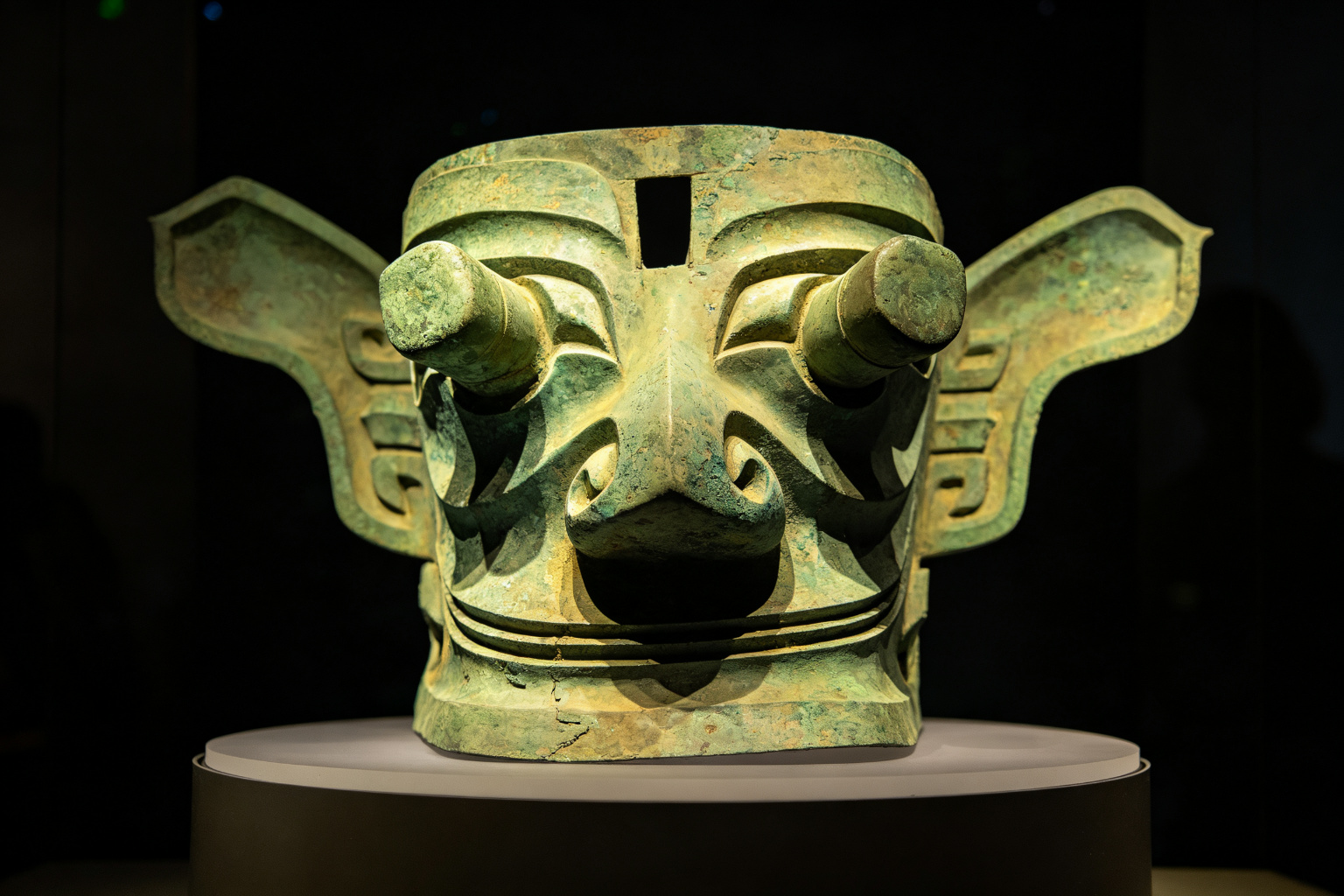
Archaeologists have excavated only a small fraction of the 5-square-kilometer site. The highlights include over a thousand pieces of gold, jade, bronze and stone, plus tens of tons of elephant ivory and vast numbers of painted elephant tusks. Unlike the warlike bronzes of the Central Plains, Jinsha objects look inward and spiritual: masks, figurines, ritual staffs and a sculpted gold and bronze figure that appears to be a high priest.
The Golden Sun Bird
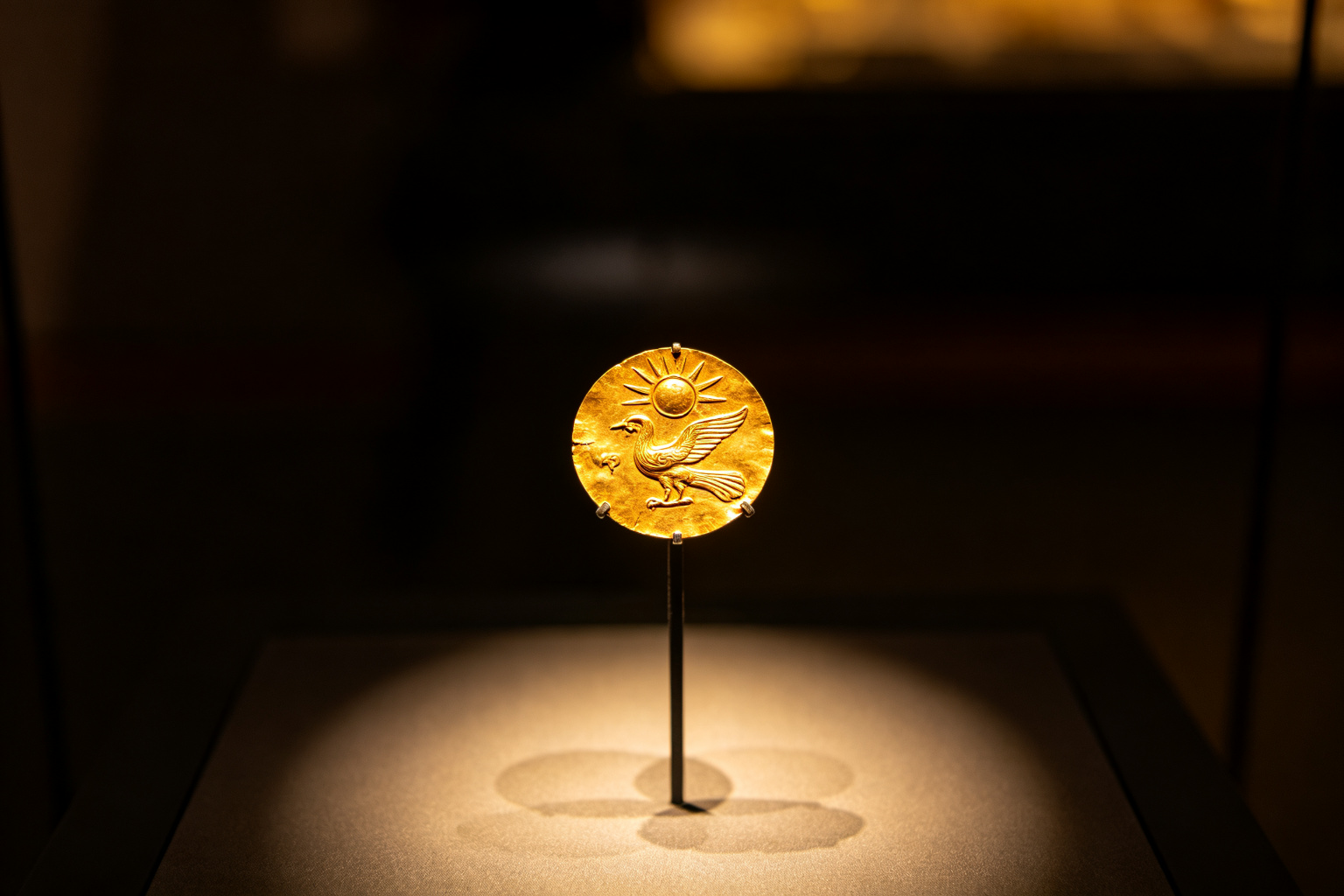
The treasure everyone comes to see is the Golden Sun Bird (太阳神鸟, Tàiyáng Shén Niǎo), a thin gold disc just 12.5 centimeters across and weighing a mere 20 grams, worked to a remarkable 94 percent purity. Its design, cut from a single sheet, shows four flying birds chasing the sun, surrounded by a swirling fire. In 2005 it was chosen as the official logo of Chinese cultural heritage, and it now flies on China's lunar missions. You can look straight through the delicate foil where sunlight shines behind it.
What it tells us
- The people of Jinsha had advanced goldworking, astronomical observation and a sun-and-bird cosmology unique to the ancient Shu civilization.
- The site proves Chengdu was not a late backwater but one of the richest ritual centers of early East Asia.
- Jinsha is widely considered the successor culture of the even more dramatic Sanxingdui civilization, an hour's drive north.
How to read the site
Rush through the galleries and you miss the point. The most moving objects are not the largest but the quietest: the thumb-sized gold foil bird, the kneeling bronze figures with their hair in neat topknots, and the raw elephant tusks still lying where they were laid down three thousand years ago. Notice how differently the Shu people imagined the human face compared with the Central Plains, round-eyed and serene rather than stern and militaristic. Spend an hour in the new museum, then cross to the site hall, where you look down into the real excavation pit with its sand, ash and ritual deposits left exactly where archaeologists found them.
Visit on a weekday morning when the light through the skylights is soft and the crowds are thin. Combine the site with Qingyang Palace, a Daoist monastery five minutes away, and end with a bowl of jasmine tea. Do not try to add Sanxingdui in the same day; it lies an hour north and deserves a morning of its own.
Practical information
- Address: No. 25 Jinsha Heritage Road, Qingyang District (青羊区金沙遗址路2号), western Chengdu
- Transport: Metro Line 7 to Jinsha Museum Station (金沙博物馆站), Exit C, then a short walk
- Opening hours: 9:00-18:00, last entry 17:00; closed most Mondays (check holidays)
- Ticket: around 70 RMB; book in peak season
- Tips: Book 2-3 hours. The Relics Hall, where you stand over the actual excavation pits, is the emotional core. The ivory preservation lab is a rare chance to see conservation live. Photography without flash is fine.
Standing over the unexcavated pits where a 3,000-year-old priesthood once offered treasures to the sun, you understand why Chengdu calls itself a city of three thousand years of uninterrupted settlement.