Most imperial tombs in China sit sealed behind mounds in the countryside. Yongling (永陵, "Eternal Tomb") is different: it is a royal mausoleum dropped inside a busy city neighborhood, and you can walk straight down into its brick vault. It is the resting place of Wang Jian (王建, 847-918), a general who became founding emperor of the Former Shu kingdom during the chaotic Five Dynasties and Ten Kingdoms period, right here in Chengdu.
Who was Wang Jian
After the Tang dynasty collapsed in 907, China split into rival states. Wang Jian, a former soldier of humble birth, took control of Sichuan and declared himself emperor of Former Shu. His 11-year reign was relatively peaceful and cultured: he protected refugees from the north, kept the arts alive, and made Chengdu a haven of Tang-style civilization when the north was at war. He died in 918 and was buried in Yongling.
The tomb and its musicians
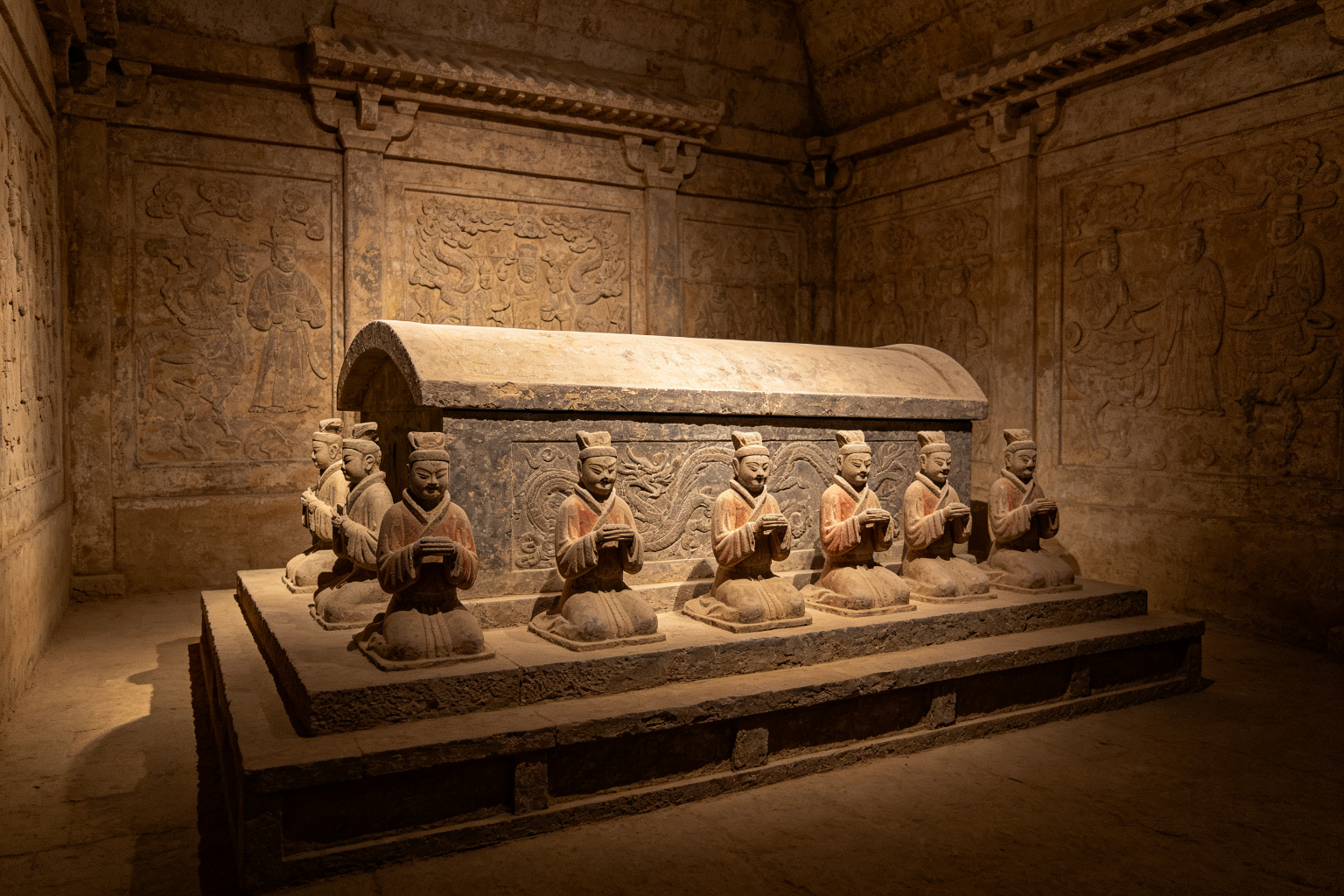
Unlike most Chinese imperial tombs, Yongling's burial chamber was built above ground and then covered by an earthen mound. When it was excavated in 1942, archaeologists found Wang Jian's stone sarcophagus. Around it, carved in low relief, are 24 female musicians (二十四伎乐) playing a full Tang court orchestra: pipa, zheng, flute, drum, panpipes and more. They are among the finest surviving images of Tang dynasty music — a frozen band from a thousand years ago. Wang Jian's stone portrait, one of the very few realistic imperial portraits to survive, also remains.
What to see
- The brick-vaulted underground palace, cool and surprisingly intact.
- The 24 musicians' reliefs around the sarcophagus platform.
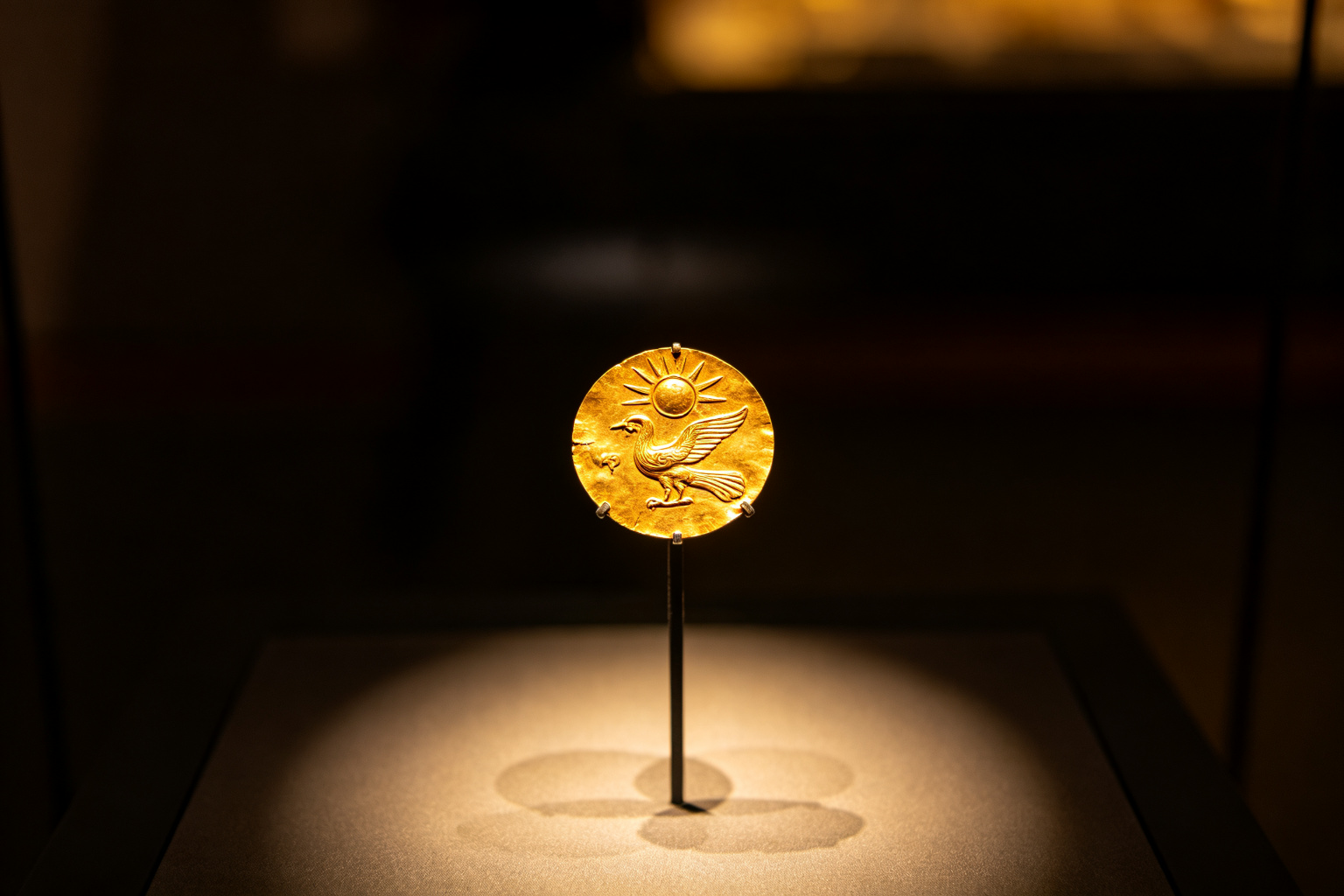
- A small museum above ground showing the king's jade belt, stone carvings and reproductions of his treasures.
The musicians on the stone coffin
The reason to come down into the underground chamber is not the emperor himself but the twenty-four stone musicians carved around his sarcophagus. They are the finest surviving record of music and dance in tenth-century China: the instruments they hold, the way they sit, the tilt of their heads. To see them is to hear, in imagination, the court orchestra that greeted Wang Jian in the afterlife. Few sites in China let you stand this close to an entire world of sound frozen in stone.
The tomb is small and cool, and you descend carefully on a modern staircase. Allow an hour, and do not miss the display of recovered gold and jade objects in the side hall. The site sits in the middle of a busy city park, so combine it with a stroll and, nearby, a bowl of tea. It is one of Chengdu's quietest and most underrated treasures.
Practical information
- Address: No. 10 Yongling Road, Jinniu District (金牛区永陵路10号), central Chengdu
- Transport: Metro Line 2 to Tonghuilin or Line 5 to Huaishu Street, then a short taxi; signs point to the small park
- Opening hours: roughly 8:30-18:00; the underground chamber may close briefly for conservation
- Ticket: a modest fee, around 20 RMB
- Tips: It is quiet and uncrowded, a perfect 1-hour stop. Bring something warm; the vault stays cool. Look carefully at the musicians' instruments — each one is a named Tang instrument.
For a thousand years the 24 musicians have kept playing in the dark. At Yongling, you can still hear them.