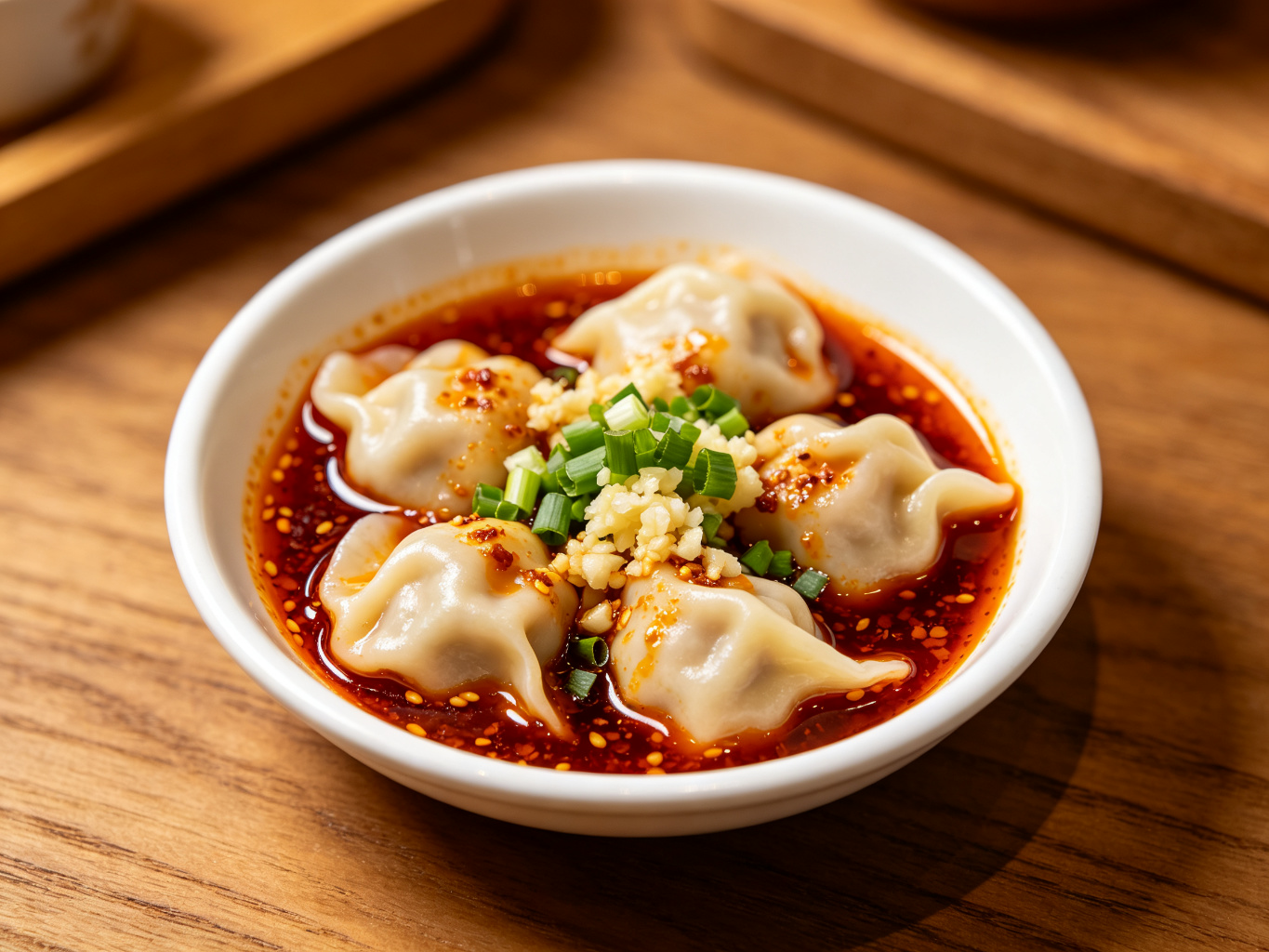
Zhong dumplings (钟水饺, zhōng shuǐjiǎo) are named after Zhong Xie, a vendor who sold boiled pork dumplings in the late Qing dynasty. Unlike northern Chinese dumplings, which come in broth or with vinegar dipping, Zhong dumplings are served dry, straight from the pot into a shallow dish, then coated in a house sauce. They are smaller than northern jiaozi, with a thinner wrapper and a pure pork filling with no cabbage or shrimp. The result is pure, concentrated comfort.
What the sauce tastes like
The defining Zhong sauce is a balanced emulsion of chili oil, light soy, a touch of sugar, a whisper of black vinegar, garlic paste and a dusting of toasted sesame. It looks fiery but tastes rounded: sweet first, then savory, then a slow Sichuan-pepper tingle at the back of the throat. Some shops add a spoon of chili flakes; keep it traditional on your first visit. Dumplings are usually served 10 to an order, plump and still hot, and you eat them in two bites, spooning up sauce with each one.
Ordering and pairing
Ask for a small portion (一两, yī liǎng, about 6 dumplings) if you are snacking, or a regular (二两, èr liǎng, 10 dumplings) for a light meal. Pair with a bowl of sour spicy soup (酸辣汤, suānlà tāng) or a cup of iced sour plum drink. Avoid ordering Zhong dumplings as the only dish in a big meal — they are a snack, not a main course.
Practical Information
- Address: Zhong Dumplings (钟水饺总店) on Renmin Middle Road near Tianfu Square, and a small branch on Chunxi Road; many noodle shops also serve a credible version.
- Transport: Metro Line 1/2 to Tianfu Square, exit A; or Line 2/3 to Chunxi Road.
- Opening Hours: around 09:00–21:00.
- Cost: ¥15–25 per small plate; average spend ¥30–50 if you add soup and a drink.
- Tips: stir the dumplings in the sauce before eating. If you want it less oily, ask for shao you (less oil).
Foreign diner tips
Zhong dumplings are one of the gentlest introductions to Sichuan spice: the heat is rounded and the sugar balances it. Watch out — they are small and addictive; visitors often order a second plate without realizing. This is the ideal snack between visits to Wuhou Shrine or Kuanzhai Alley.
Pairings, Drinks and Table Etiquette
Chengdu meals almost always begin with tea. A pot of strong green tea (绿茶, lǜchá) or jasmine tea (茉莉花茶, mòlìhuāchá) clears the palate between spicy bites. Locals also order cold Yanjing beer (燕京啤酒, Yānjīng píjiǔ) or sugarcane juice (甘蔗汁, gānzhezhī) to round out the heat. When the bill arrives, watch how locals pay: the person who organized the meal usually insists, and gentle pushing of the receipt back and forth is part of the ritual, not a quarrel. If you are a guest, let your host pay; if you invited, claim the bill with a smile. Always wipe your chopsticks on the hot towel (热手巾, rè shǒujīn) before eating, and never plant chopsticks upright in the rice bowl—it resembles incense offered to the dead. If a dish is too spicy, do not reach for water; ask for the free iced sour-plum drink (酸梅汤, suānméitāng) or a bowl of plain rice. Chengdu is informal by Chinese standards: slurping, loud chatter and second helpings are all signs of a happy table.