About 40 kilometers northwest of Chengdu, in the flat farmland of Guanghan, the most shocking archaeological discovery of modern China was made by accident. In 1929 a farmer digging a ditch found a pit of jade; in 1986 archaeologists opened two huge sacrificial pits and pulled out bronzes unlike anything in the Chinese record. This is Sanxingdui (三星堆, "Three Star Mounds"), a kingdom that flourished roughly 2800-3200 years ago and left not a single written word behind.
The look of Sanxingdui
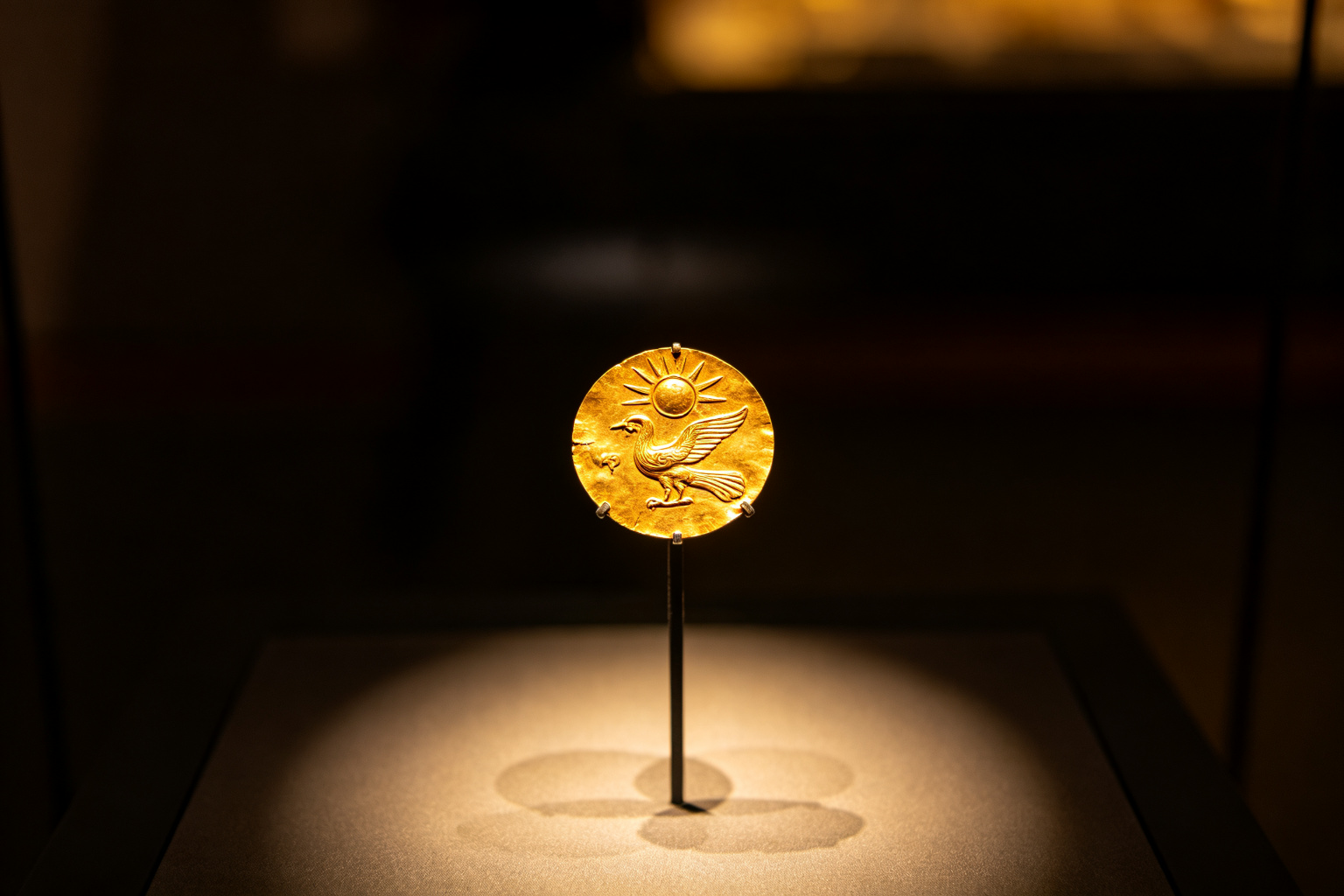
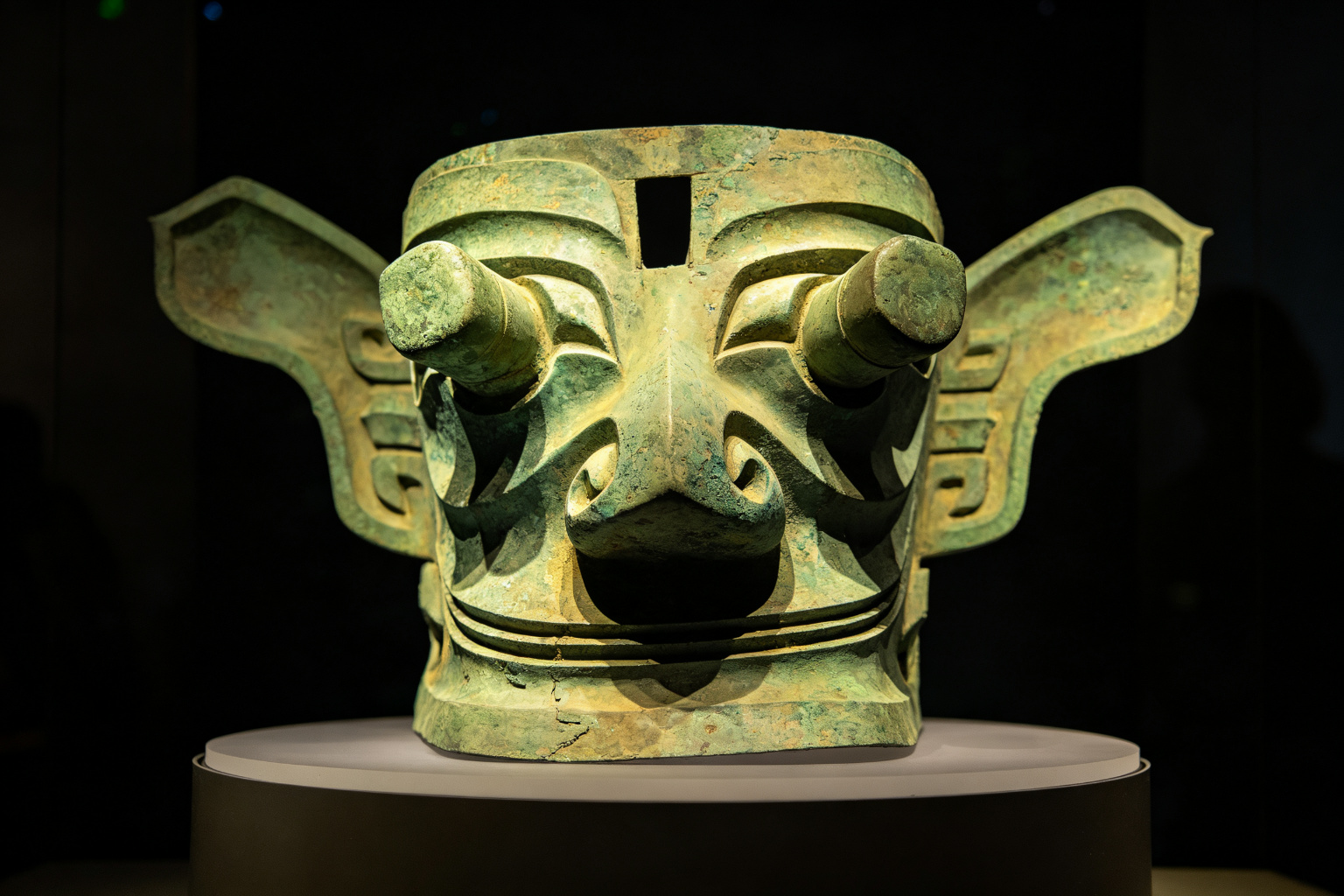
Forget the graceful bronzes of the Central Plains. Sanxingdui's signature is the sacred bronze mask: a geometric face with wide mouth, flat body and two cylindrical eyes that protrude nearly 16 centimeters outward. One giant mask stands over 3.5 meters tall. There are gold scepters, a five-meter-high bronze sacred tree, bronze birds, and a mask plated with real gold leaf. The effect is alien, theatrical and utterly unforgettable.
Why it matters
- Sanxingdui proves that a complex, highly artistic civilization existed in the Sichuan basin, parallel to the Shang dynasty, with its own religion and art.
- It forced historians to rethink the "central plains" story of China and to accept a plural, multi-center origin of Chinese civilization.
- No one yet knows why the people sealed their finest treasures in pits and vanished; the writing they may have used has never been found.
The new museum
A breathtaking new Sanxingdui Museum opened in 2023, built around the freshly excavated pits 3 to 8. You can now look down into the actual sacrificial pits and see how the bronzes were smashed, burned and buried. The architecture itself is a landmark, half-buried and pierced by light.
Why the masks feel so alien
Stand in front of the bronze masks and the first sensation is shock: none of these faces looks Chinese in the way you expect. Protruding pupils, arched eyebrows jutting forward, lips set in an unreadable line, ears flared like wings. Archaeologists still debate whether the bulging eyes depict shamans, disease, or simply an artistic language lost to history. Whatever the answer, the effect is deliberately unsettling, as if the civilization wanted to remind visitors that it saw the world differently.
The best time to go is early, before tour buses arrive. Walk slowly past the masks, the nine bronze birds on their tree, and the sacred staff. Allow two to three hours. Many visitors pair it with a stop at Guanghan on the way back, and return to Chengdu by late afternoon. Buy the combined ticket that includes the new branch near the airport if you want both the masks and the modern displays, but the original sacrificial pits are the heart of the experience.
Practical information
- Location: Sanxingdui Site, Guanghan City (广汉市西安路), Deyang, roughly 40 km from central Chengdu
- Transport: Take high-speed train from Chengdu East or Chengdu North to Guanghan North (about 18 minutes), then bus/taxi to the museum; direct tourist buses also run from the West China (Xibu) tourism center
- Opening hours: 8:30-18:00, last entry around 17:00; closed Mondays off-season
- Ticket: about 72 RMB; reserve online well ahead, especially weekends and holidays
- Tips: Plan a full half-day, including the drive. Audio guide or a guided tour is strongly recommended, because the labels alone cannot explain the mystery. Combine it with Jinsha for the full ancient-Shu story.
Sanxingdui is not a quiet museum visit. Standing face to face with those staring bronze eyes, you feel the presence of a civilization we still do not know how to read.