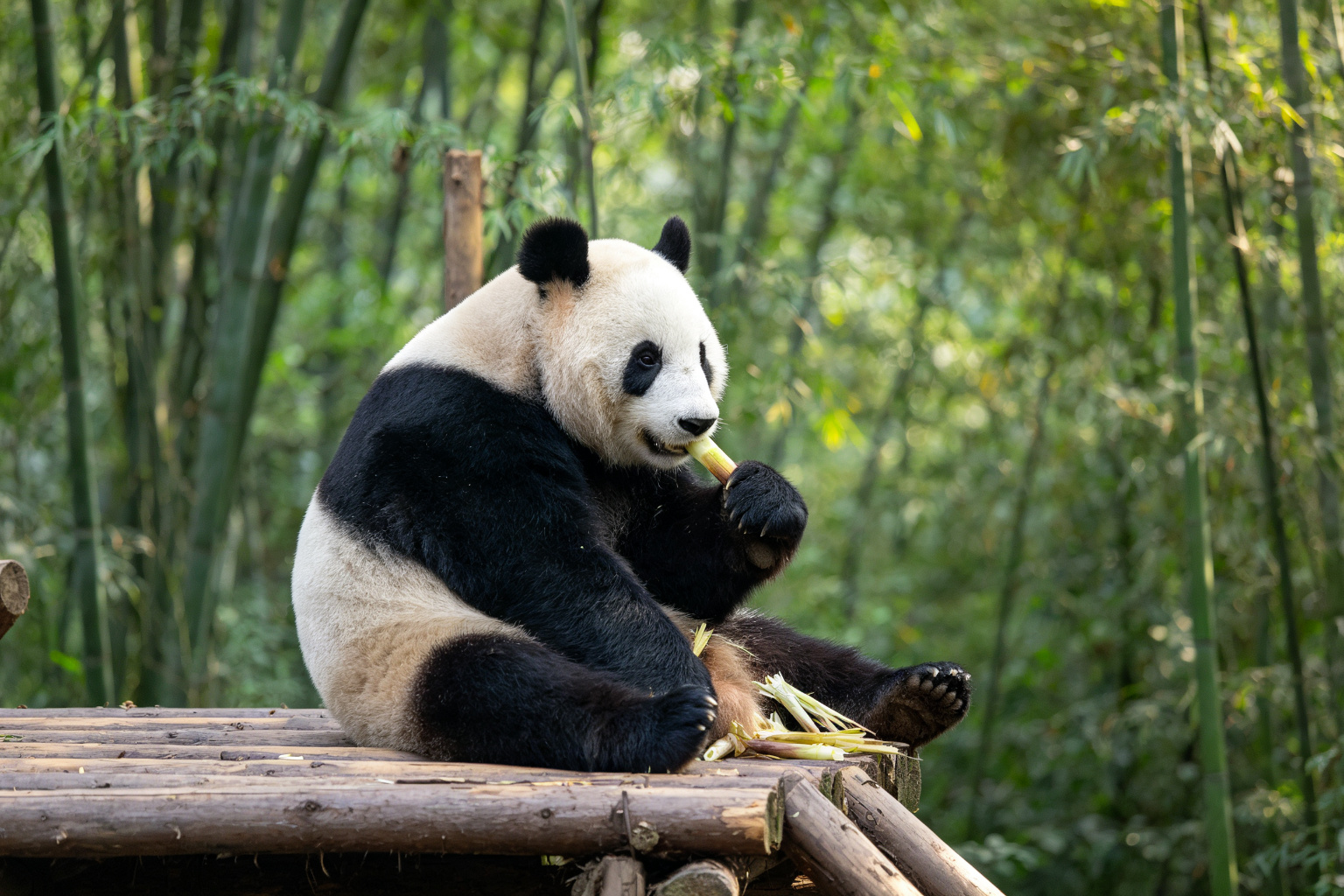
No trip to Chengdu is complete without visiting the Chengdu Research Base of Giant Panda Breeding (成都大熊猫繁育研究基地, Dàxióngmāo Fányù Yánjiū Jīdì), a sprawling park in the north of the city that is home to more than 200 giant pandas and red pandas. Unlike zoos elsewhere, this place was built specifically to study, breed and return pandas to the wild, and the enclosures are generous, green and surprisingly quiet.
Why timing matters
Pandas are native to the cool, misty mountains of Sichuan, and once the Chengdu sun warms up by late morning they curl into a ball and fall asleep. You must arrive before 8:30 AM to catch them munching bamboo, tumbling, climbing trees and playing with each other. By 11 AM most pandas look like fuzzy black-and-white rocks. The base opens at 7:30 AM in peak season, so early risers are rewarded.
What you will see
- Adult panda villas: open hillside enclosures where 3 to 6 adults share space
- Giant panda nurseries: watch volunteers weigh and measure pink newborns (from the viewing gallery)
- Red panda zone: smaller, fox-like relatives that roam freely through a wooded area
- Baby panda kindergarten: the most popular spot, with six-month cubs tumbling on a play frame
Practical Information
- Address: 1375 Xiongmao Avenue, Chenghua District (成华区熊猫大道1375号)
- Metro: Take Line 3 to Chunqiao Station (熊猫大道/动物园方向), then a 10-minute bus or taxi; or Metro Line 3 to Zoo Station and transfer to a direct bus
- Hours: 7:30 AM – 6:00 PM (last entry 5:00 PM); summer hours may extend
- Tickets: ¥55 adult, ¥27 half-price for students; book in advance on WeChat mini-program "成都大熊猫繁育研究基地"
- Duration: 3–4 hours; add 1 hour if you also visit the new Shenshuping valley area
- Best time: Spring (March–May) and autumn (September–November); mornings on weekdays are quietest
Tips for foreign visitors
Bring water and wear comfortable shoes — the park is large and mostly hilly. Do not shout, flash cameras or lean over rails; pandas look cuddly but can bite. If you want a once-in-a-lifetime photo, apply for the volunteer keeper program in advance (¥1000+ per person, includes feeding). Avoid weekends and Chinese public holidays when crowds double.
Getting around Chengdu. The metro covers most central sights; buy a Yangchengtong card or use the Alipay/WeChat QR on your phone. Taxis start at 8 yuan and are cheap by Western standards, but Didi (the Chinese Uber) is even easier and shows the fare upfront. Buses are crowded but cover everywhere. For day trips to Dujiangyan, Mount Qingcheng or Anren, book through your hotel front desk or use the intercity rail app. Chengdu is a walkable city in the centre, but summer heat and humidity can exhaust you — plan a tea break in the afternoon. English is spoken in major hotels and tourist sights, but almost nowhere else; download a translation app and carry a hotel card in Chinese to show taxi drivers.
Money, safety and etiquette. Chengdu is one of the safest major cities in China; violent crime against tourists is rare. Still, watch your bag on crowded buses and at Jinli or Kuanzhai Alley. Tap-to-pay dominates — most small vendors accept Alipay or WeChat Pay even for 5-yuan snacks, but carry cash (100-yuan notes) for remote temples and older taxi drivers. Tipping is not expected and can be awkward. When visiting temples, dress modestly (shoulders and knees covered), and do not point at statues with your finger. Sichuanese food is genuinely numbing-spicy; if you cannot handle heat, order buguo la (not spicy) or ask for the dip on the side. Bottled water is cheap; drink bottled, not tap.