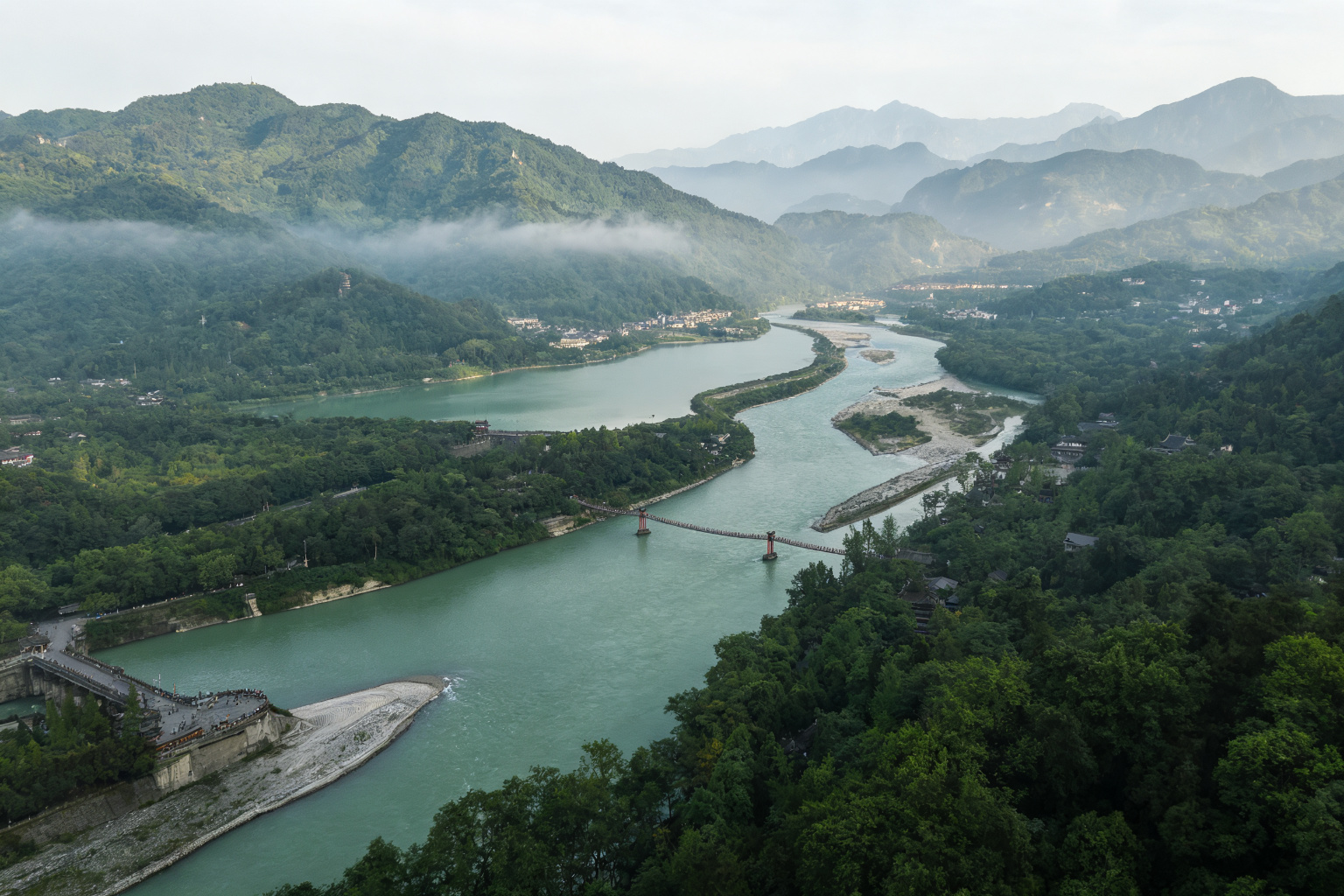
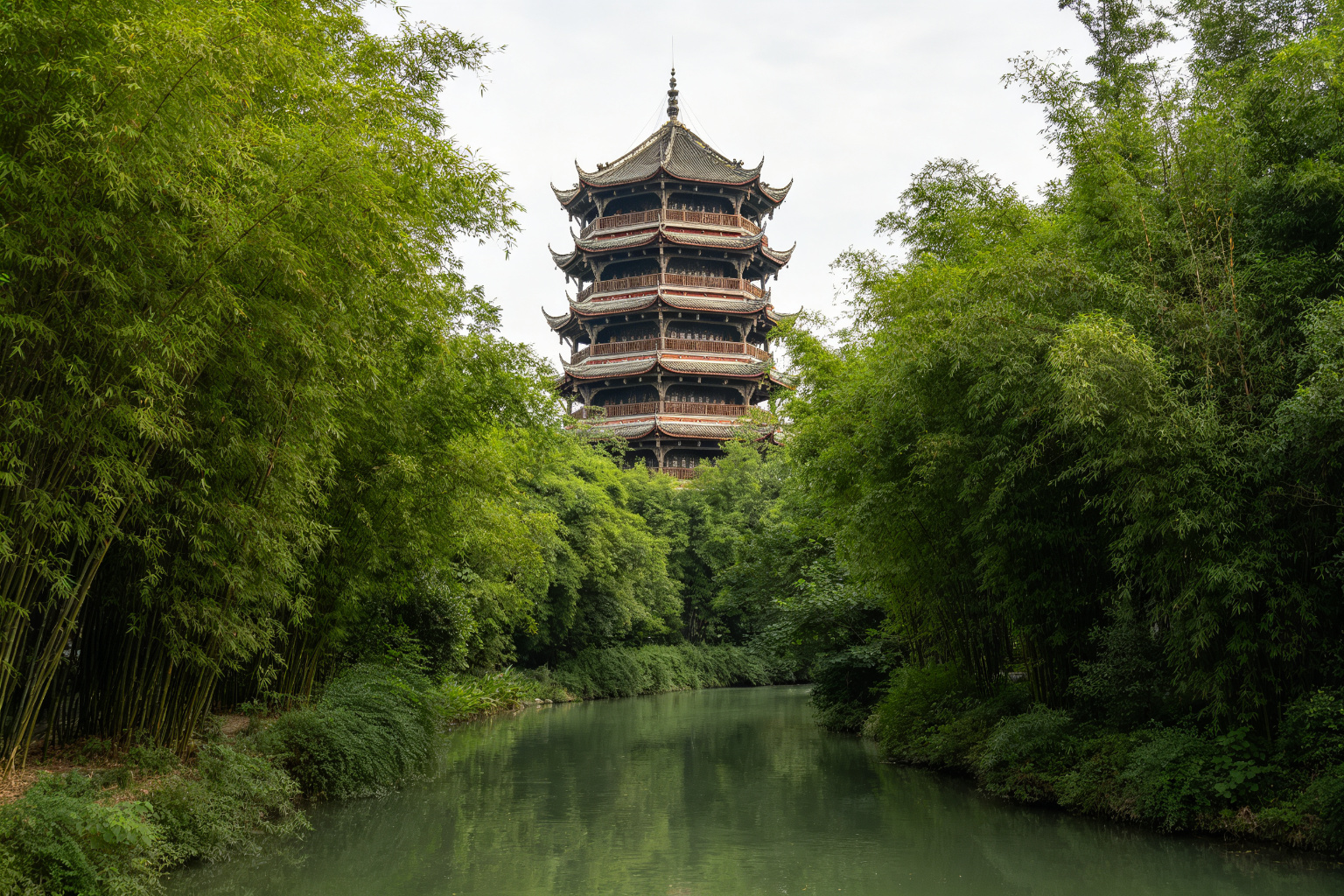
Wangjianglou Park (望江楼公园, Wàngjiānglóu Gōngyuán) sits on the east bank of the Jin River (Jinjiang) in southeast Chengdu. It is dedicated to Xue Tao (薛涛, 768–832 AD), one of the few women poets of the Tang dynasty whose work is still read. The park is famous for two things: a collection of more than 200 species of bamboo from across China, and the 30-meter-tall Chongli Tower (崇丽阁), the park's icon and one of Chengdu's most photographed buildings.
Xue Tao's legacy
Xue Tao was a courtesan-poet in Tang Chengdu who corresponded with the leading poets of her age (her surviving poems number around 90). She invented a special pink-tinted writing paper called Xue Tao Paper (薛涛笺), still sold as a souvenir. The park's name "Wangjiang Lou" means "Tower Viewing the River" — the tower was built in her memory in the Qing dynasty.
What to see
- Chongli Tower (崇丽阁): a four-story, 30 m wooden tower, best lit at sunset; climb it for a view over the Jin River
- Bamboo groves: more than 200 species, including black bamboo, giant moso bamboo and dwarf bamboo — come in spring for new shoots
- Xue Tao Memorial Garden (薛涛园): small courtyards with her statue, paper-making exhibits, and a teahouse
- Jin River embankment: locals walk, fish and practice tai chi here; great for an evening stroll
Practical Information
- Address: 300 Wangjiang Road, Jinjiang District (锦江区望江路300号)
- Metro: Line 6 to Wangjianglou Station (顺江路/三官堂站), exit, walk 10 minutes; or bus 19/35/19 to "Wangjianglou" stop
- Hours: 6:00 AM – 9:00 PM (free area); Chongli Tower area 8:00 AM – 6:00 PM
- Tickets: Outer park free; inner garden with tower ¥20
- Duration: 1.5–2 hours
- Best time: Late afternoon for golden light on the tower; spring for bamboo shoots and cherry blossoms
Tips for foreign visitors
The park is mostly local — few tourists — and a lovely quiet contrast to Kuanzhai or Jinli. Wear mosquito repellent in summer. The inner garden with the tower is worth the ¥20 even though it is small. Combine with a walk along the Jin River south to the Jiuyanqiao bar district for dinner. This is a good 90-minute reset between museum visits.
Getting around Chengdu. The metro covers most central sights; buy a Yangchengtong card or use the Alipay/WeChat QR on your phone. Taxis start at 8 yuan and are cheap by Western standards, but Didi (the Chinese Uber) is even easier and shows the fare upfront. Buses are crowded but cover everywhere. For day trips to Dujiangyan, Mount Qingcheng or Anren, book through your hotel front desk or use the intercity rail app. Chengdu is a walkable city in the centre, but summer heat and humidity can exhaust you — plan a tea break in the afternoon. English is spoken in major hotels and tourist sights, but almost nowhere else; download a translation app and carry a hotel card in Chinese to show taxi drivers.
Money, safety and etiquette. Chengdu is one of the safest major cities in China; violent crime against tourists is rare. Still, watch your bag on crowded buses and at Jinli or Kuanzhai Alley. Tap-to-pay dominates — most small vendors accept Alipay or WeChat Pay even for 5-yuan snacks, but carry cash (100-yuan notes) for remote temples and older taxi drivers. Tipping is not expected and can be awkward. When visiting temples, dress modestly (shoulders and knees covered), and do not point at statues with your finger. Sichuanese food is genuinely numbing-spicy; if you cannot handle heat, order buguo la (not spicy) or ask for the dip on the side. Bottled water is cheap; drink bottled, not tap.