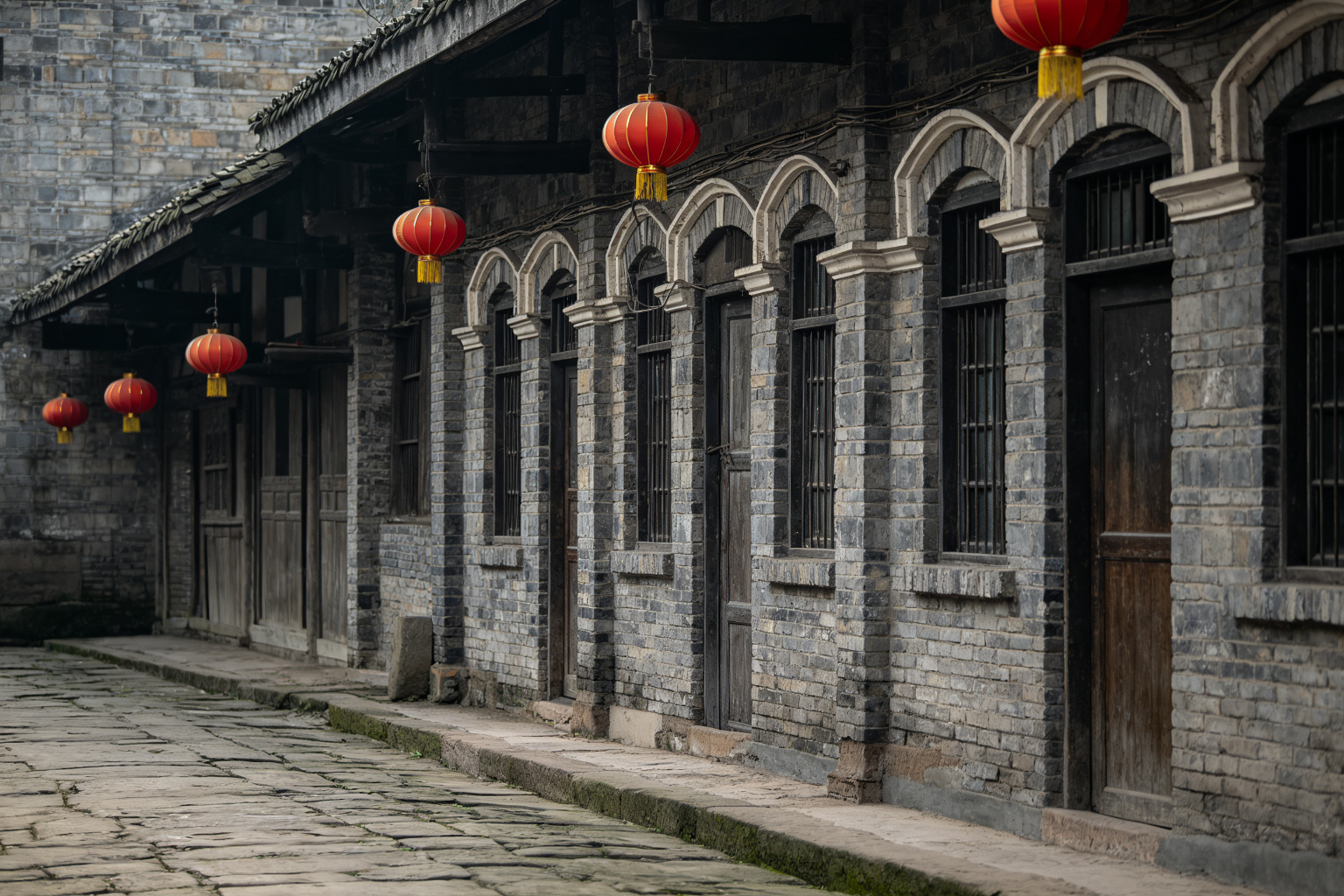
Anren Ancient Town (安仁古镇, Ānrén Gǔzhèn) is a perfectly preserved Republican-era (1912–1949) town 50 km west of Chengdu in Dayi County. Its main street is lined with 27 stone mansions built by warlords and bankers of the 1930s and 1940s — grey brick, arched verandas, wooden shutters and red lanterns. But the real reason to come is the Jianchuan Museum Cluster (建川博物馆聚落, Jiànchuān Bówùguǎn Jùluò): a privately built collection of 30+ themed museums, opened in 2003 by real-estate billionaire Fan Jianchuan, covering the War of Resistance, the Great Leap Forward, the Cultural Revolution and everyday Republican-era life.
Why it is unusual
Most Chinese museums tell the official story. Jianchuan is private, eclectic and unflinching: you will see a whole hall of Cultural Revolution porcelain, another of Second-Sino-Japanese-War soldier kit, another of 1950s household objects. It is moving, sometimes uncomfortable, and uniquely honest. Many exhibits are in Chinese, but the visual power translates.
What to see
- Main old street (树人街/裕民街): 27 Republican mansions, free entry to exteriors; some are small museums
- Jianchuan Cluster: buy a combined ticket (¥100) for the cluster; pick 5–6 halls in 4 hours
- War of Resistance Hall: the most visited — weaponry, uniforms, survivor testimonies
- Red Chronicles Hall: Cultural Revolution posters, statues, everyday objects — the most talked-about
- Chen Bolin Mansion (刘氏庄园): a 1940s warlord's mansion, now a museum on Republican-era family life
Practical Information
- Address: Anren Town, Dayi County (大邑县安仁镇), 50 km west of Chengdu
- Getting there: Take the bus from Chengdu Chadianzi Bus Station (茶店子车站) to Anren, ¥18, 1.5 hours. Or taxi/Didi from Chengdu, about ¥120 each way, 1 hour.
- Hours: Old town all day; museums 9:00 AM – 5:30 PM (closed Mondays)
- Tickets: Old town free; Jianchuan Cluster ¥100 (single ticket valid all halls for one day); Chen Bolin Mansion ¥40
- Duration: 5–6 hours including travel from Chengdu
- Best time: Weekdays; weekends are family trips
Tips for foreign visitors
This is not a quick stop — budget a full day. Wear walking shoes. Bring a water bottle; the museums are large. Some exhibits (Cultural Revolution, war) are emotionally heavy; take breaks. English labels are sparse in the smaller halls, but the objects speak. If you only do one museum in the cluster, do the War of Resistance Hall. Lunch is available inside the cluster for ¥40–60 per person.
Getting around Chengdu. The metro covers most central sights; buy a Yangchengtong card or use the Alipay/WeChat QR on your phone. Taxis start at 8 yuan and are cheap by Western standards, but Didi (the Chinese Uber) is even easier and shows the fare upfront. Buses are crowded but cover everywhere. For day trips to Dujiangyan, Mount Qingcheng or Anren, book through your hotel front desk or use the intercity rail app. Chengdu is a walkable city in the centre, but summer heat and humidity can exhaust you — plan a tea break in the afternoon. English is spoken in major hotels and tourist sights, but almost nowhere else; download a translation app and carry a hotel card in Chinese to show taxi drivers.
Money, safety and etiquette. Chengdu is one of the safest major cities in China; violent crime against tourists is rare. Still, watch your bag on crowded buses and at Jinli or Kuanzhai Alley. Tap-to-pay dominates — most small vendors accept Alipay or WeChat Pay even for 5-yuan snacks, but carry cash (100-yuan notes) for remote temples and older taxi drivers. Tipping is not expected and can be awkward. When visiting temples, dress modestly (shoulders and knees covered), and do not point at statues with your finger. Sichuanese food is genuinely numbing-spicy; if you cannot handle heat, order buguo la (not spicy) or ask for the dip on the side. Bottled water is cheap; drink bottled, not tap.