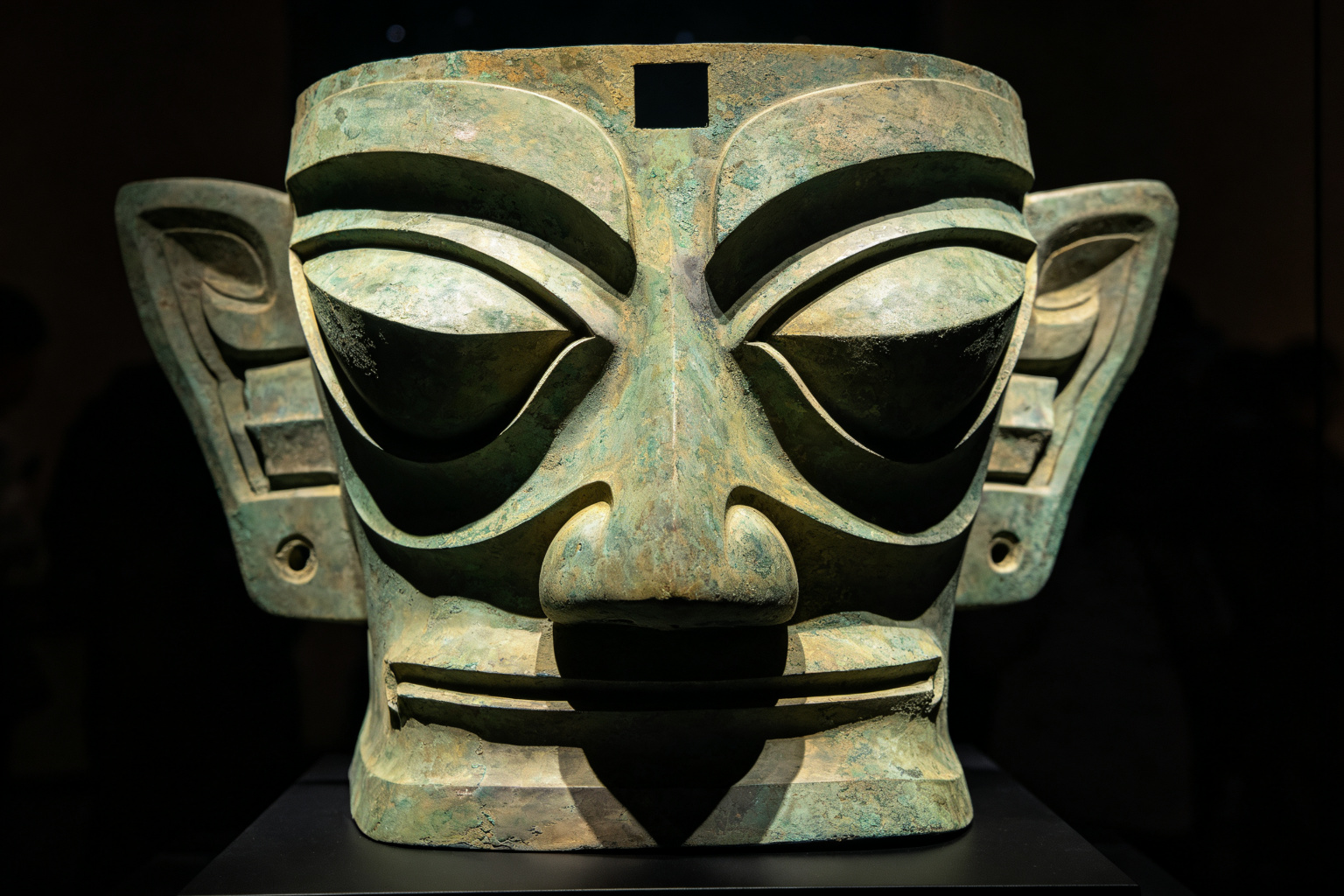
Sanxingdui (三星堆, literally "Three Star Piles") is an archaeological site 40 km north of Chengdu, near Guanghan city, that rewrote Chinese history. In 1986, farmers digging a ditch discovered two sacrificial pits filled with bronze masks over two meters tall, bronze trees, gold scepters, elephant tusks and jade — none of which match any known Chinese culture. The civilization that made them (c. 1600–1100 BC) is now understood as the ancient Shu kingdom, a sophisticated society that flourished in Sichuan in parallel with the Shang dynasty on the Central Plains.
Why it feels "alien"
The bronze masks are unlike anything in ancient China:
- Grand Bronze Mask: 1.32 m wide, with protruding pupils 16 cm long and huge ears — often called the "alien mask"
- Bronze Sacred Tree: 3.96 m tall, with nine birds and dragons, one of the tallest bronze objects from the ancient world
- Gold Scepter: 1.42 m long, carved with fish, birds and human heads — a royal symbol
- Bronze Standing Figure: 2.62 m tall, the oldest full-life-sized bronze statue in the world
No writing has ever been found at Sanxingdui. The civilization simply vanished, leaving only these baffling objects.
Practical Information
- Address: Sanxingdui Archaeological Site, Guanghan City (广汉市西安路133号), 40 km north of Chengdu
- Getting there: Take bus from Chengdu Chadianzi Bus Station (茶店子车站) to Guanghan, ¥17, 1 hour; then bus 10 or 6 to the museum. Or high-speed train from Chengdu North/East to Guanghan North Station (广汉北站), 18 minutes, then taxi 10 minutes.
- Hours: 8:30 AM – 6:00 PM (last entry 5:00 PM); closed Mondays
- Tickets: ¥72 adult; half-price students. New museum hall opened in 2023 — allow full day
- Duration: 4–5 hours including travel
- Best time: Tuesday–Friday; avoid school holidays
Tips for foreign visitors
The new museum (2023) is huge — wear walking shoes and start early. English labels are good but the "why" of the masks is still debated. Photography without flash allowed. Bring lunch — inside food is overpriced. If you only have one ancient site in your Chengdu trip, choose Sanxingdui over Jinsha; Jinsha is the sequel, Sanxingdui the main act.
Getting around Chengdu. The metro covers most central sights; buy a Yangchengtong card or use the Alipay/WeChat QR on your phone. Taxis start at 8 yuan and are cheap by Western standards, but Didi (the Chinese Uber) is even easier and shows the fare upfront. Buses are crowded but cover everywhere. For day trips to Dujiangyan, Mount Qingcheng or Anren, book through your hotel front desk or use the intercity rail app. Chengdu is a walkable city in the centre, but summer heat and humidity can exhaust you — plan a tea break in the afternoon. English is spoken in major hotels and tourist sights, but almost nowhere else; download a translation app and carry a hotel card in Chinese to show taxi drivers.
Money, safety and etiquette. Chengdu is one of the safest major cities in China; violent crime against tourists is rare. Still, watch your bag on crowded buses and at Jinli or Kuanzhai Alley. Tap-to-pay dominates — most small vendors accept Alipay or WeChat Pay even for 5-yuan snacks, but carry cash (100-yuan notes) for remote temples and older taxi drivers. Tipping is not expected and can be awkward. When visiting temples, dress modestly (shoulders and knees covered), and do not point at statues with your finger. Sichuanese food is genuinely numbing-spicy; if you cannot handle heat, order buguo la (not spicy) or ask for the dip on the side. Bottled water is cheap; drink bottled, not tap.