In 2001, construction workers digging a sewer at a housing development in western Chengdu stumbled on something extraordinary: the remains of a 1,200-year-old Shu kingdom capital (c. 1200–650 BC), with more than 10,000 gold, jade, bronze and ivory artifacts buried in ritual pits. The Jinsha Site Museum (金沙遗址博物馆, Jīnshā Yízhì Bówùguǎn) was built over the excavation site and is one of the best modern museums in China.
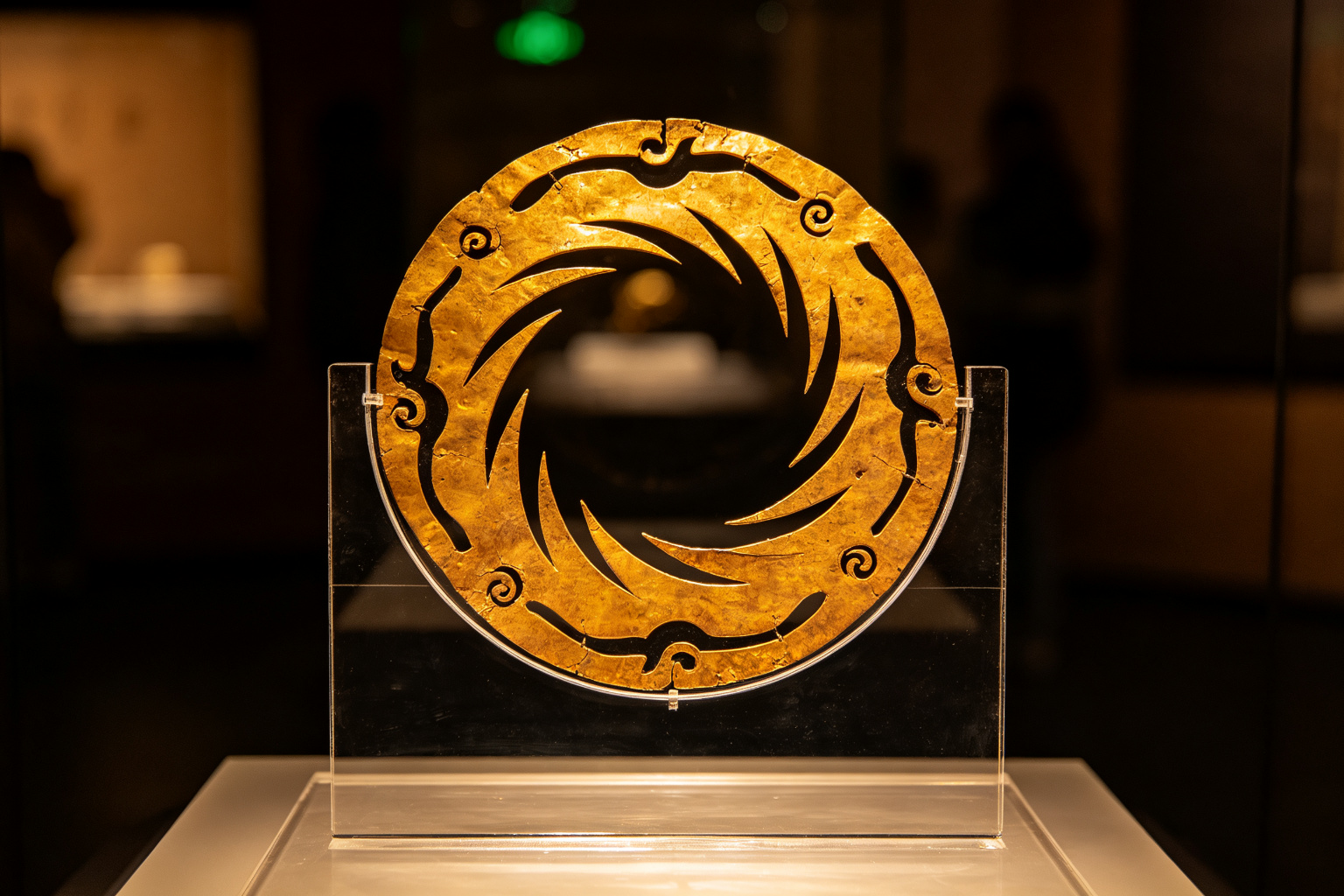
The Golden Sun Bird
The museum's star object is the Golden Sun Bird (太阳神鸟, Tàiyáng Shénniǎo): a 24-gram sheet of pure gold, 12.5 cm in diameter, cut so thin it is translucent. Four flying birds circle a central sun with twelve rays. It is 3,000 years old, found in 2007, and is now the official emblem of Chinese cultural heritage — you will see it on cultural-institution signage across the country.
What to see
- Relic Hall (遗迹馆): the actual excavation pit, covered by a glass roof — watch archaeologists still at work
- Exhibition Hall (陈列馆): five floors of gold masks, jade cong tubes, ivory, bronze knives
- Conservation Center: glass wall where conservators clean and study the finds
- River-side garden: bamboo groves and a small lake where you can rest
Practical Information
- Address: 25 Jinsha遗址 Road, Qingyang District (青羊区金沙遗址路25号)
- Metro: Line 7 to Jinsha Site Museum Station (金沙博物馆站), exit C, directly at the gate
- Hours: 9:00 AM – 6:00 PM (last entry 5:00 PM); closed Mondays
- Tickets: ¥70 adult; half-price students; English audio guide ¥20
- Duration: 2.5–3 hours
- Best time: Tuesday–Thursday mornings; weekends are busy but the museum is large
Tips for foreign visitors
English labels are good in the main halls. Start at the Relic Hall to understand the excavation, then move to the Exhibition Hall. If you also have time for Sanxingdui (see #10), Jinsha is the "beginner" version and Sanxingdui the "wow" version — do Jinsha first. Combine with Du Fu Thatched Cottage 2 km east for a half-day on Chengdu's west side. Photography without flash is allowed.
Getting around Chengdu. The metro covers most central sights; buy a Yangchengtong card or use the Alipay/WeChat QR on your phone. Taxis start at 8 yuan and are cheap by Western standards, but Didi (the Chinese Uber) is even easier and shows the fare upfront. Buses are crowded but cover everywhere. For day trips to Dujiangyan, Mount Qingcheng or Anren, book through your hotel front desk or use the intercity rail app. Chengdu is a walkable city in the centre, but summer heat and humidity can exhaust you — plan a tea break in the afternoon. English is spoken in major hotels and tourist sights, but almost nowhere else; download a translation app and carry a hotel card in Chinese to show taxi drivers.
Money, safety and etiquette. Chengdu is one of the safest major cities in China; violent crime against tourists is rare. Still, watch your bag on crowded buses and at Jinli or Kuanzhai Alley. Tap-to-pay dominates — most small vendors accept Alipay or WeChat Pay even for 5-yuan snacks, but carry cash (100-yuan notes) for remote temples and older taxi drivers. Tipping is not expected and can be awkward. When visiting temples, dress modestly (shoulders and knees covered), and do not point at statues with your finger. Sichuanese food is genuinely numbing-spicy; if you cannot handle heat, order buguo la (not spicy) or ask for the dip on the side. Bottled water is cheap; drink bottled, not tap.