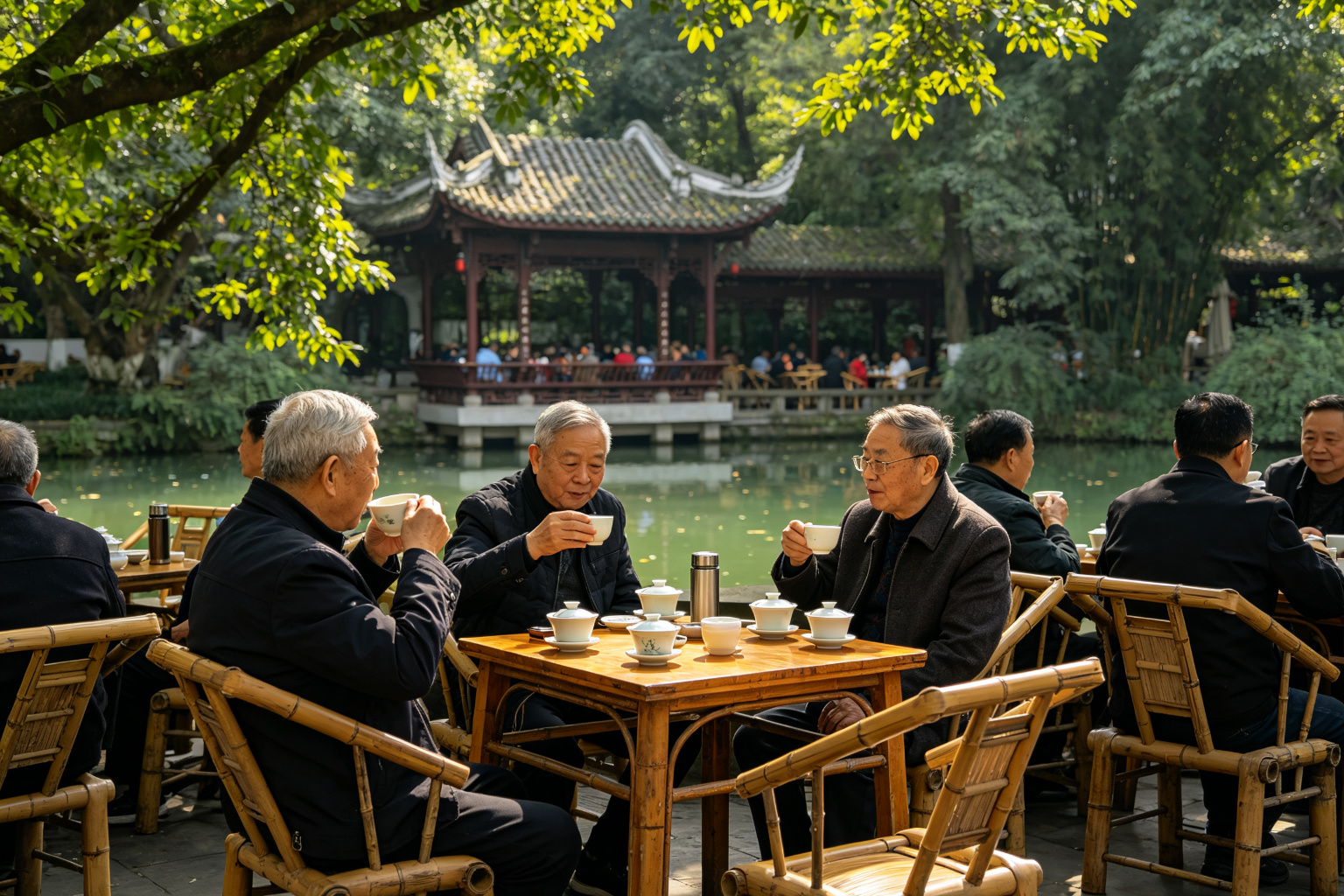
People's Park (人民公园, Rénmín Gōngyuán) was founded in 1911 and is the closest thing Chengdu has to a living postcard of local life. On any sunny morning, the park is packed with grandparents dancing, playing chess, singing folk opera, practicing calligraphy on the pavement with water brushes, and — most famously — sitting for hours over a cup of jasmine tea at the Heming Teahouse (鹤鸣茶社, Hèmíng Cháshè).
The Heming Teahouse
Heming ("Crane Singing") was founded in 1923 and is the most authentic old-style teahouse in Chengdu. Rows of bamboo chairs and wooden tables sit under a giant cedar tree. You pay once (¥15–30 per person), pour hot water into your own covered bowl, and refill yourself all afternoon. Old men bring their own birdcages and newspapers. This is Chengdu's answer to a London pub or a Parisian café — a place to sit, not to consume.
Other park highlights
- Zhengong Monument (辛亥秋保路死事纪念碑): 1913 memorial to the railway uprising that helped trigger the 1911 Revolution
- Small lake with paddleboats: row a swan boat for ¥40/hour
- Pavement calligraphy corner: elderly artists write Tang poems on the flagstones with water — watch, don't disturb
- Sichuan opera tea-house stage: occasional outdoor opera and folk music in the afternoon
Practical Information
- Address: 8 Shaocheng Road, Qingyang District (青羊区少城路8号), just west of Tianfu Square
- Metro: Line 2 or 4 to Tianfu Square Station (天府广场站), exit H, walk 5 minutes west; or Line 2 to People's Park Station (人民公园站), exit D
- Hours: Park 6:00 AM – 10:00 PM; Heming Teahouse 7:30 AM – 9:00 PM
- Cost: Park free; tea ¥15–35; snacks on the side ¥10–20
- Duration: 2–3 hours; stay longer if you want the full tea immersion
- Best time: Weekend mornings, when every table is taken; weekday afternoons are quieter
Tips for foreign visitors
Order jasmine tea (茉莉花茶, mòlìhuā chá) — the Chengdu classic. Sit, don't rush. The tea master will refill your water from a long-spouted copper kettle; do not flinch. If someone invites you to their chess game, join — it is friendly. This is not a "tourist attraction"; it is where locals live. Dress casually. A great 90-minute break between sightseeing.
Getting around Chengdu. The metro covers most central sights; buy a Yangchengtong card or use the Alipay/WeChat QR on your phone. Taxis start at 8 yuan and are cheap by Western standards, but Didi (the Chinese Uber) is even easier and shows the fare upfront. Buses are crowded but cover everywhere. For day trips to Dujiangyan, Mount Qingcheng or Anren, book through your hotel front desk or use the intercity rail app. Chengdu is a walkable city in the centre, but summer heat and humidity can exhaust you — plan a tea break in the afternoon. English is spoken in major hotels and tourist sights, but almost nowhere else; download a translation app and carry a hotel card in Chinese to show taxi drivers.
Money, safety and etiquette. Chengdu is one of the safest major cities in China; violent crime against tourists is rare. Still, watch your bag on crowded buses and at Jinli or Kuanzhai Alley. Tap-to-pay dominates — most small vendors accept Alipay or WeChat Pay even for 5-yuan snacks, but carry cash (100-yuan notes) for remote temples and older taxi drivers. Tipping is not expected and can be awkward. When visiting temples, dress modestly (shoulders and knees covered), and do not point at statues with your finger. Sichuanese food is genuinely numbing-spicy; if you cannot handle heat, order buguo la (not spicy) or ask for the dip on the side. Bottled water is cheap; drink bottled, not tap.