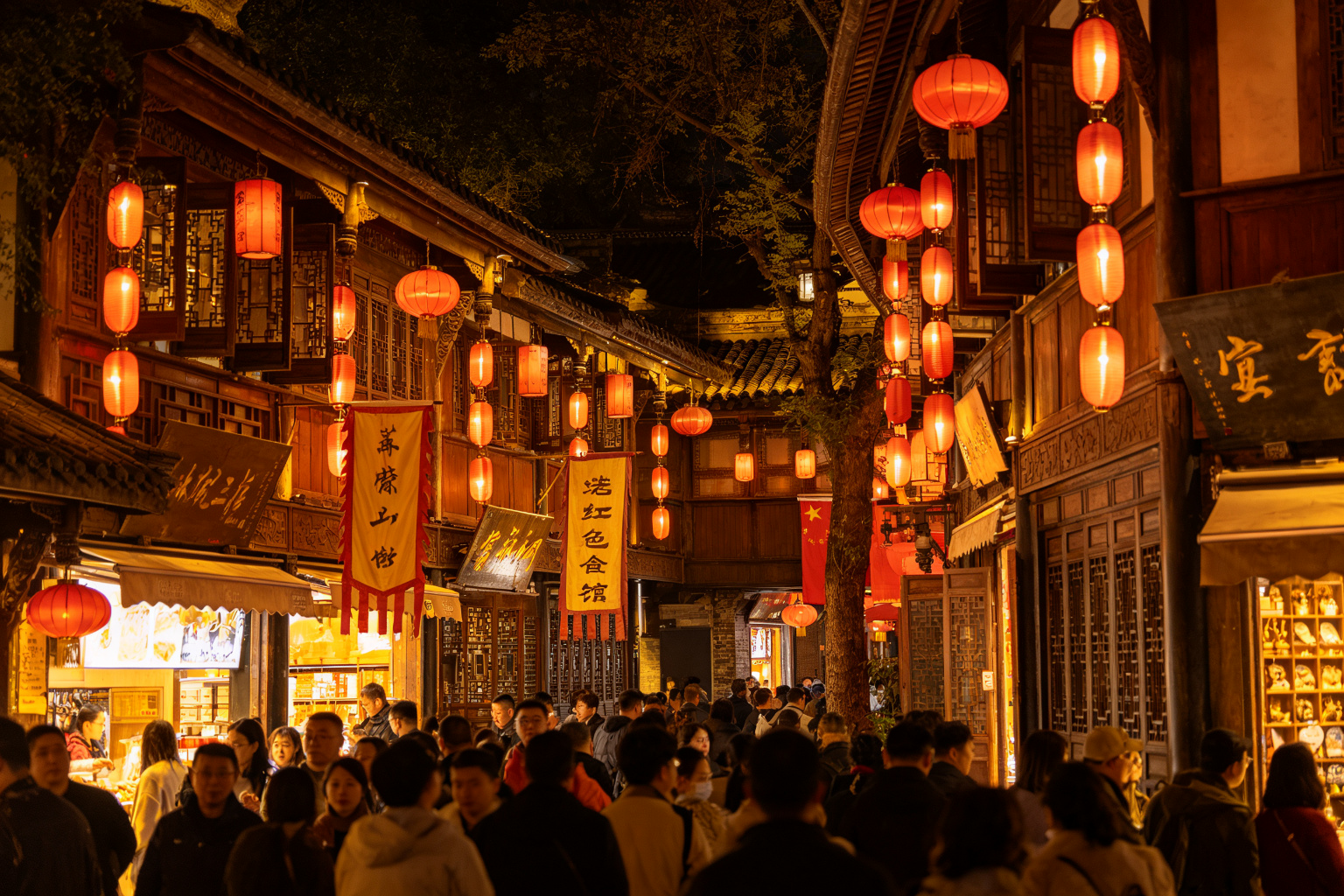
Jinli Ancient Street (锦里古街, Jǐnlǐ Gǔjiē) is a 500-meter pedestrian lane of wooden facades, red lanterns and street food that was rebuilt in the Qing-dynasty style next to Wuhou Shrine. "Jinli" was the name of Chengdu in the Three Kingdoms period, and the lane is the commercial companion to the shrine: where Wuhou teaches history, Jinli sells the fantasy version of it.
What to eat and buy
- 三大炮 sandàpào: glutinous rice balls thrown against a wooden drum and dusted with soybean flour
- 糖画 tánghuà: sugar painting — a craftsman draws dragons or butterflies in melted sugar on a stick
- 叶儿粑 yè'érbā: glutinous rice cakes steamed in bamboo leaves
- 川剧面具 chuànjù miànjù: Sichuan opera mask souvenirs
- 盖碗茶 gàiwǎnchá: covered-bowl tea in a courtyard teahouse
Atmosphere
By day it is a cheerful tourist lane; by night, when the red lanterns are lit and the opera masks glow, it becomes one of Chengdu's most atmospheric walks. There is a small Sichuan opera teahouse inside Jinli where you can book a 90-minute变脸 (face-changing) show in the evening.
Practical Information
- Address: 231 Wuhouci Avenue, Wuhou District (武侯区武侯祠大街231号), inside the Wuhou Shrine scenic area
- Metro: Line 3 or 5 to Gaoshengqiao Station, exit D, walk 10 minutes south; or Line 1 to Jinjiang Hotel Station, walk 15 minutes
- Hours: Street shops 10:00 AM – 10:00 PM; free entry, no ticket needed
- Cost: Entry free; snacks ¥10–30 each; Sichuan opera show ¥150–380 depending on seat
- Duration: 1–2 hours; combine with Wuhou Shrine for half a day
- Best time: Late afternoon into evening, when lanterns come on
Tips for foreign visitors
It is touristy — prices are 20–30% higher than local markets, and the food is aimed at visitors. But it is clean, safe, and a great introduction to Chengdu snack culture. Eat one small thing at a time and walk. Bargaining is unusual here; prices are marked. Bring cash for the smaller stalls. If you want a less crowded version, walk to Yulin Road (玉林路) 2 km south for the real local version of food-and-drinks streets.
Getting around Chengdu. The metro covers most central sights; buy a Yangchengtong card or use the Alipay/WeChat QR on your phone. Taxis start at 8 yuan and are cheap by Western standards, but Didi (the Chinese Uber) is even easier and shows the fare upfront. Buses are crowded but cover everywhere. For day trips to Dujiangyan, Mount Qingcheng or Anren, book through your hotel front desk or use the intercity rail app. Chengdu is a walkable city in the centre, but summer heat and humidity can exhaust you — plan a tea break in the afternoon. English is spoken in major hotels and tourist sights, but almost nowhere else; download a translation app and carry a hotel card in Chinese to show taxi drivers.
Money, safety and etiquette. Chengdu is one of the safest major cities in China; violent crime against tourists is rare. Still, watch your bag on crowded buses and at Jinli or Kuanzhai Alley. Tap-to-pay dominates — most small vendors accept Alipay or WeChat Pay even for 5-yuan snacks, but carry cash (100-yuan notes) for remote temples and older taxi drivers. Tipping is not expected and can be awkward. When visiting temples, dress modestly (shoulders and knees covered), and do not point at statues with your finger. Sichuanese food is genuinely numbing-spicy; if you cannot handle heat, order buguo la (not spicy) or ask for the dip on the side. Bottled water is cheap; drink bottled, not tap.