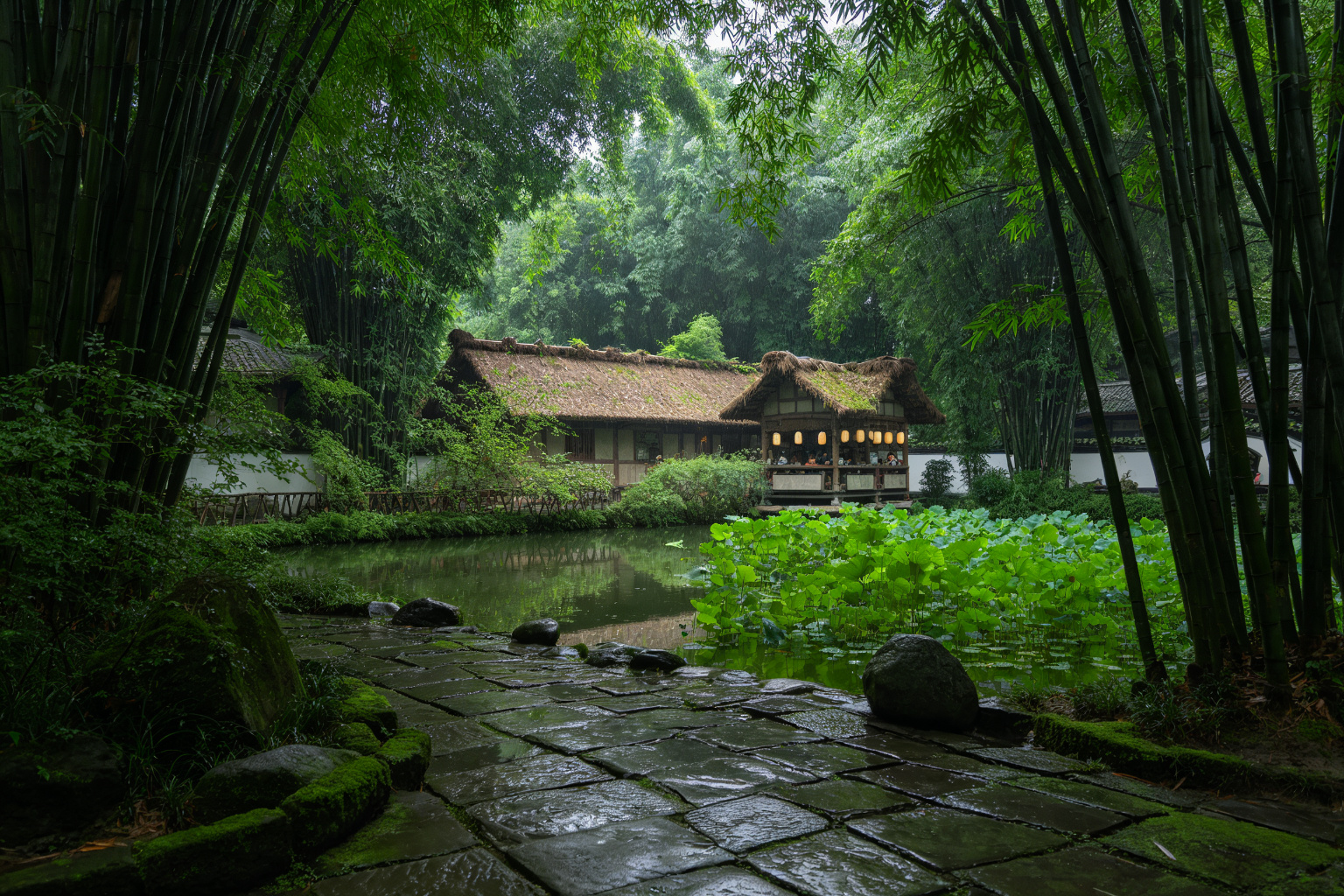
Du Fu Thatched Cottage (杜甫草堂, Dù Fǔ Cǎotáng) is a memorial to Du Fu (712–770 AD), often called the "Poet Sage" of China, who lived in exile in Chengdu for four years during the Tang dynasty. The simple hut he built by the Flower Washing Stream (浣花溪) became a literary pilgrimage site from the Song dynasty onward, and today's 24-hectare garden is one of the most serene spots in Chengdu.
Who was Du Fu
Du Fu is to Chinese literature what Shakespeare is to English. His 1,400 surviving poems chronicle the An Lushan Rebellion, the fall of Chang'an, and ordinary people's suffering with a historian's eye and a painter's ear. In Chengdu, his tone softened; he wrote of bamboo, moonlight, wine, his children, and the wind tearing the thatch off his roof (the famous poem "Thatched Cottage Unroofed by the Autumn Wind").
What to see
- Thatched Cottage replica: a simple reconstruction of the poet's hut, with bamboo fence and thatched roof
- Yaofan Tang Hall (大雅堂): the main exhibition hall, with statues of Du Fu and 12 other Tang poets
- Flower Washing Shrine (浣祠堂): Ming-dynasty hall with a Du Fu statue
- Du Fu Poetry History Museum: excellent exhibits on his life, manuscripts and calligraphy (Chinese labels only, but photos help)
- Bamboo groves and lotus ponds: the gardens themselves are the attraction — come at sunrise or late afternoon
Practical Information
- Address: 37 Qinghua Road, Qingyang District (青羊区青华路37号)
- Metro: Line 4 to Caotang North Road Station (草堂北路站), exit B, then walk 10 minutes; or bus 19/35/58 to "Du Fu Caotang" stop
- Hours: 9:00 AM – 6:00 PM (last entry 5:30 PM)
- Tickets: ¥50 adult; half-price students
- Duration: 2–3 hours
- Best time: Weekday mornings; lotus blooms in June–July, bamboo is green year-round
Tips for foreign visitors
The complex is large and partly outdoors; bring water and an umbrella for summer sun. English signs are limited but the gardens are walkable without them. Combine with Jinsha Site Museum 2 km away — both are on the west side and make a half-day. If you love poetry, spend extra time at the Thatched Cottage replica. There is a small bookshop with English-translated Du Fu collections.
Getting around Chengdu. The metro covers most central sights; buy a Yangchengtong card or use the Alipay/WeChat QR on your phone. Taxis start at 8 yuan and are cheap by Western standards, but Didi (the Chinese Uber) is even easier and shows the fare upfront. Buses are crowded but cover everywhere. For day trips to Dujiangyan, Mount Qingcheng or Anren, book through your hotel front desk or use the intercity rail app. Chengdu is a walkable city in the centre, but summer heat and humidity can exhaust you — plan a tea break in the afternoon. English is spoken in major hotels and tourist sights, but almost nowhere else; download a translation app and carry a hotel card in Chinese to show taxi drivers.
Money, safety and etiquette. Chengdu is one of the safest major cities in China; violent crime against tourists is rare. Still, watch your bag on crowded buses and at Jinli or Kuanzhai Alley. Tap-to-pay dominates — most small vendors accept Alipay or WeChat Pay even for 5-yuan snacks, but carry cash (100-yuan notes) for remote temples and older taxi drivers. Tipping is not expected and can be awkward. When visiting temples, dress modestly (shoulders and knees covered), and do not point at statues with your finger. Sichuanese food is genuinely numbing-spicy; if you cannot handle heat, order buguo la (not spicy) or ask for the dip on the side. Bottled water is cheap; drink bottled, not tap.