
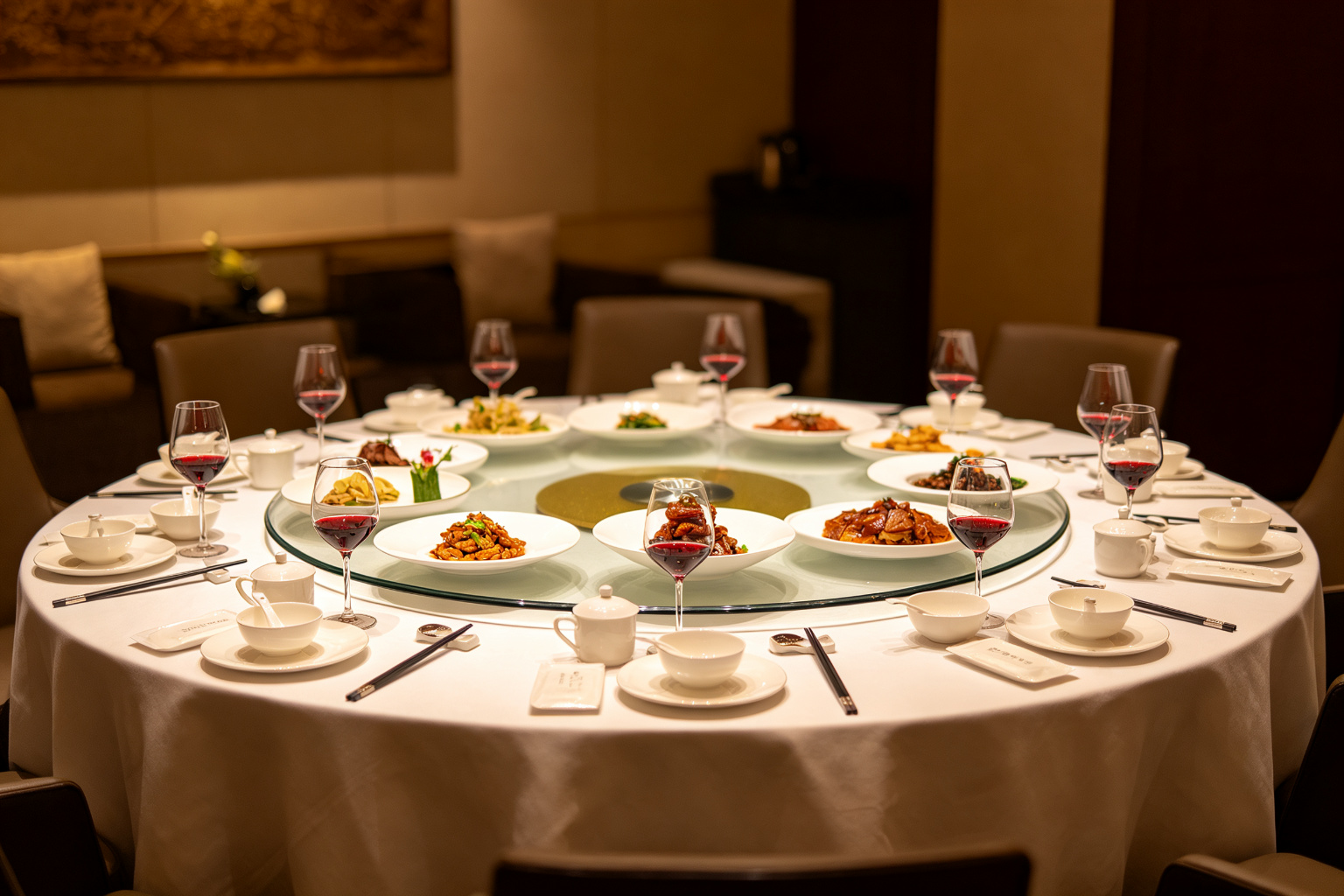
In China, the real negotiation often moves from the meeting room to the round table. A business banquet is not dinner: it is a working social ritual that tests trust, hierarchy and endurance. Get the etiquette wrong and a promising deal can wobble. Get it right and you will be invited back. Chengdu banquets follow the national script but add local warmth, heavier spice and a more relaxed attitude toward drink than, say, Beijing.
The setting is almost always a round table with a glass lazy Susan, set for eight to twelve people. The host sits facing the door, the guest of honour to the host's right, with ranks descending outwards. Dishes come in waves: cold appetisers first, then a sequence of hot plates, soup, staple and fruit. Tea is poured constantly; alcohol arrives with the hot food.
The rules that matter
- Seating: wait to be shown. The guest of honour seat is to the right of the host.
- Toasting order: the host opens with a welcome toast. Then senior Chinese guests toast the guest of honour, followed by junior staff. You toast back to the most senior person, not the room.
- Glass etiquette: clink your glass slightly below your counterpart's to show respect. Hold the glass with one hand supported under the bowl by the other.
- Drinking: baijiu (white spirit) is traditional, but beer, red wine and tea are universally accepted. A polite refusal is fine; never fake a drink or pour the wine yourself.
- Ordering: the host orders. Do not take the menu unless invited. Expect a mix of Sichuan signature dishes and some milder options for guests.
- Paying the bill: the host always pays. Do not fight openly; a polite offer once is enough. If you are hosting, settle the bill before the meal ends.
- Chopsticks: never stick them upright in rice (funerary). Use public serving chopsticks when offered.
Practical Information
- Address: popular business-banquet restaurants cluster near Financial City, the Jinjiang hotel strip and the old city; ask your host to book.
- Transport: taxi or DiDi; do not drive if you have drunk.
- Opening Hours: business banquets typically 18:30-21:00; tea receptions earlier.
- Cost: a mid-range business banquet with alcohol runs roughly ¥300-600 per person; high-end private rooms ¥800-1500.
- Tips: if you do not drink, hold your glass, smile and say wo hui ché (I am taking medicine) or wo shao shao he (I will drink a little). Offer a toast in tea; that is socially acceptable.
For foreign business visitors
Eat what is offered; Chengdu cuisine is the draw. If a dish looks unfamiliar, take one bite and praise it. Do not discuss hard business during the first courses; leave the real conversation to the tea after the meal. Thank the host with a short toast at the end and follow up by WeChat the next morning. A good banquet, more than a slide deck, decides whether a Chinese client trusts you.
What to expect on the menu
A formal Chengdu business banquet will usually open with cold appetisers: Sichuan sausage, sliced beef in chili oil, marinated cucumber and a spiced peanut dish. Hot courses then arrive in a deliberate rhythm, often mixing the local and the mild. Expect mapo tofu, kung pao chicken, twice-cooked pork, boiled fish in chili broth, stir-fried seasonal greens and a bowl of yangchun noodles or fried rice near the end. The host may order one show-stopping dish such as steamed fish or a whole braised pork belly; finish it and praise the chef. Tea is poured continuously; green tea or jasmine tea is the default. If you have dietary restrictions, tell the host the day before the banquet, not at the table. Vegetarian guests should also speak up in advance, because Chinese banquets default to meat-heavy menus. After the meal, the host may propose tea or karaoke as an optional extension; joining once builds goodwill, but you are not expected to stay if you are tired.