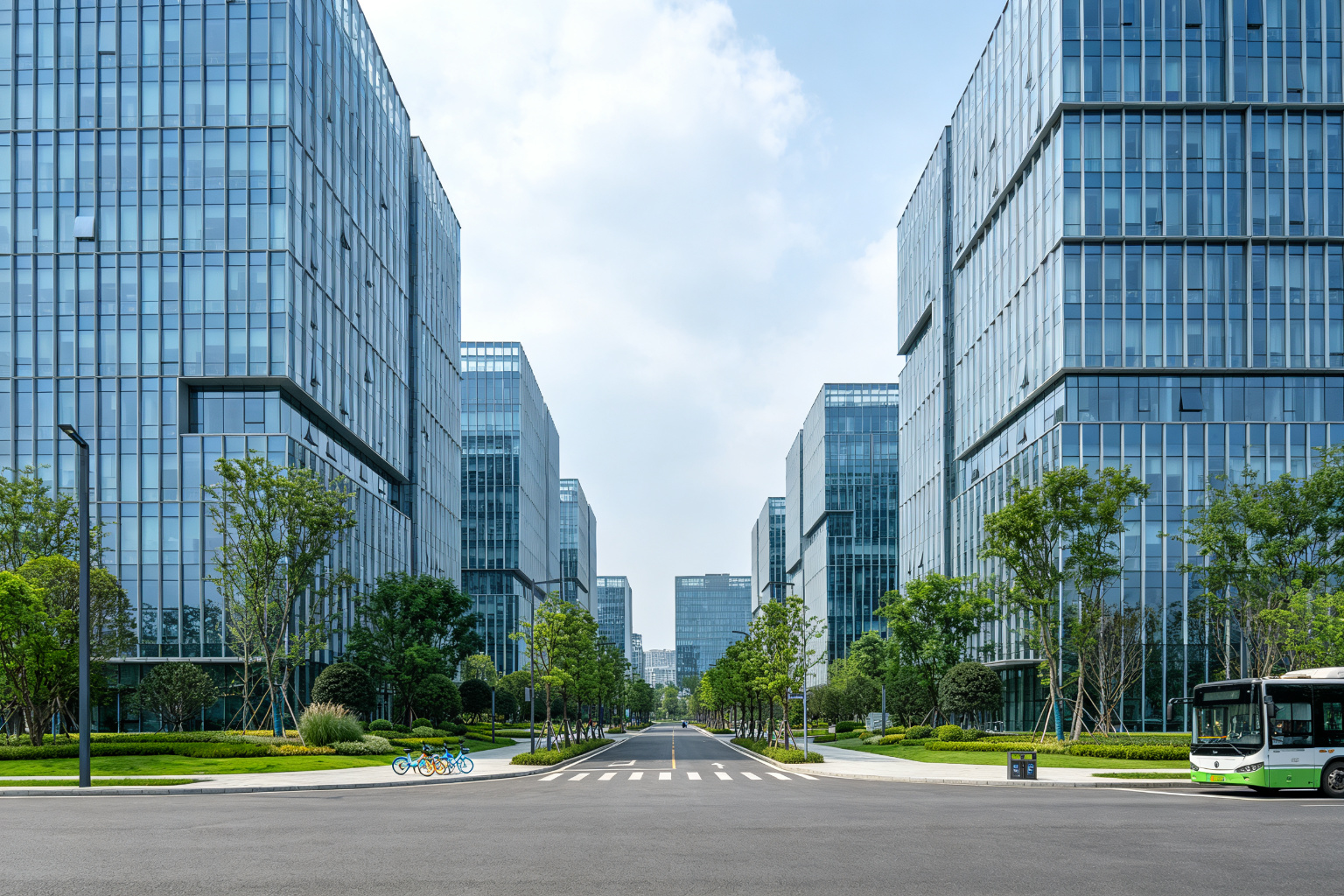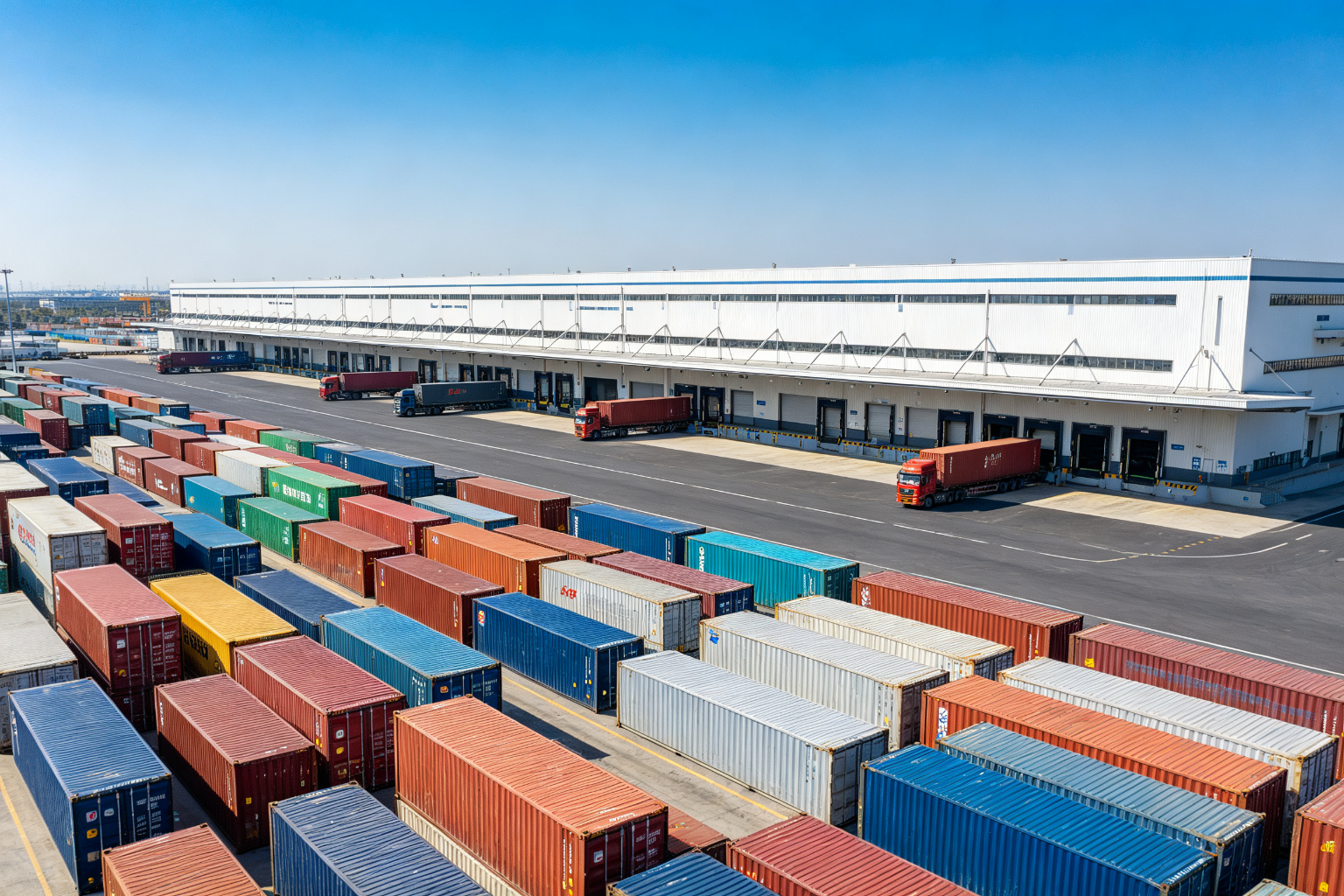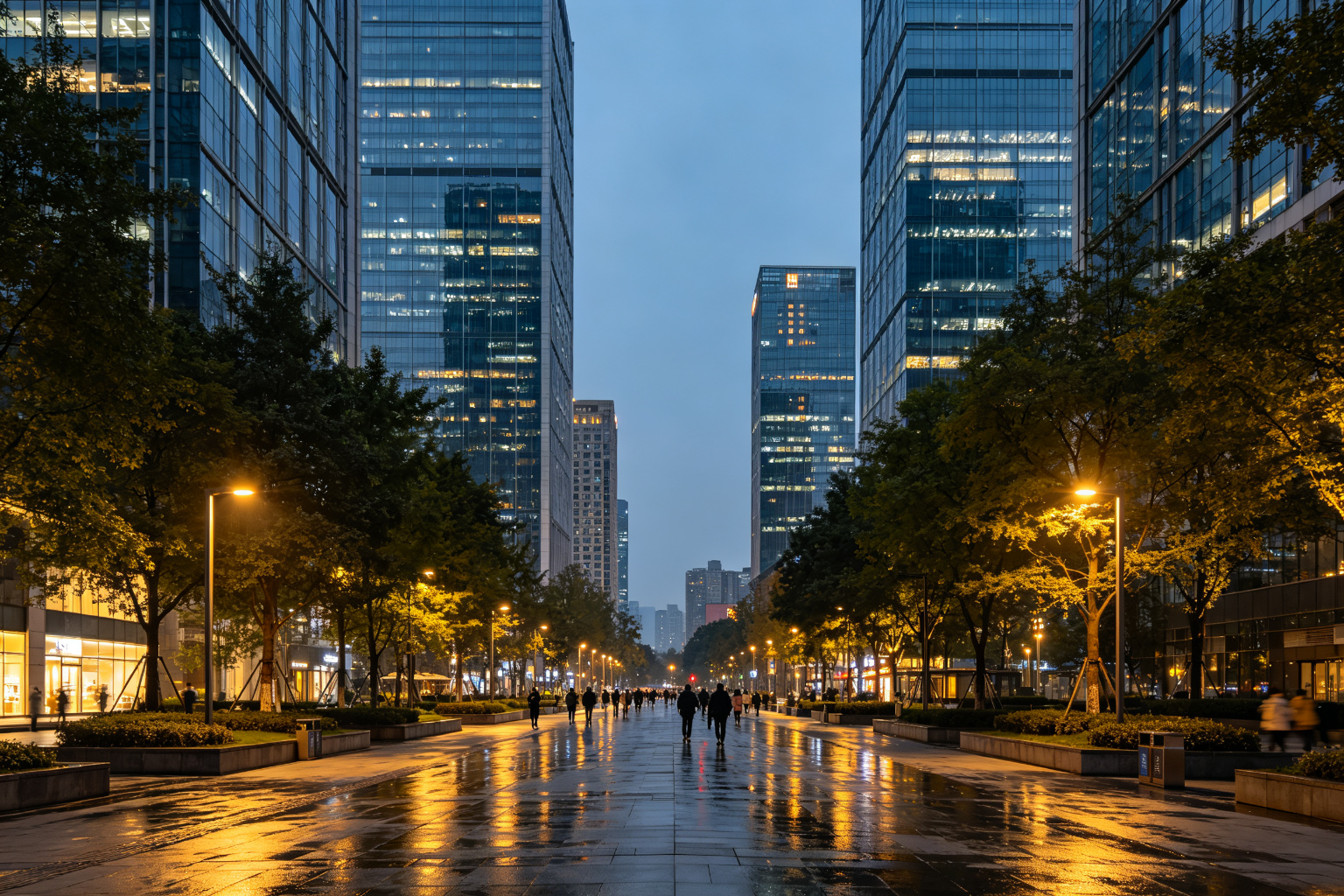
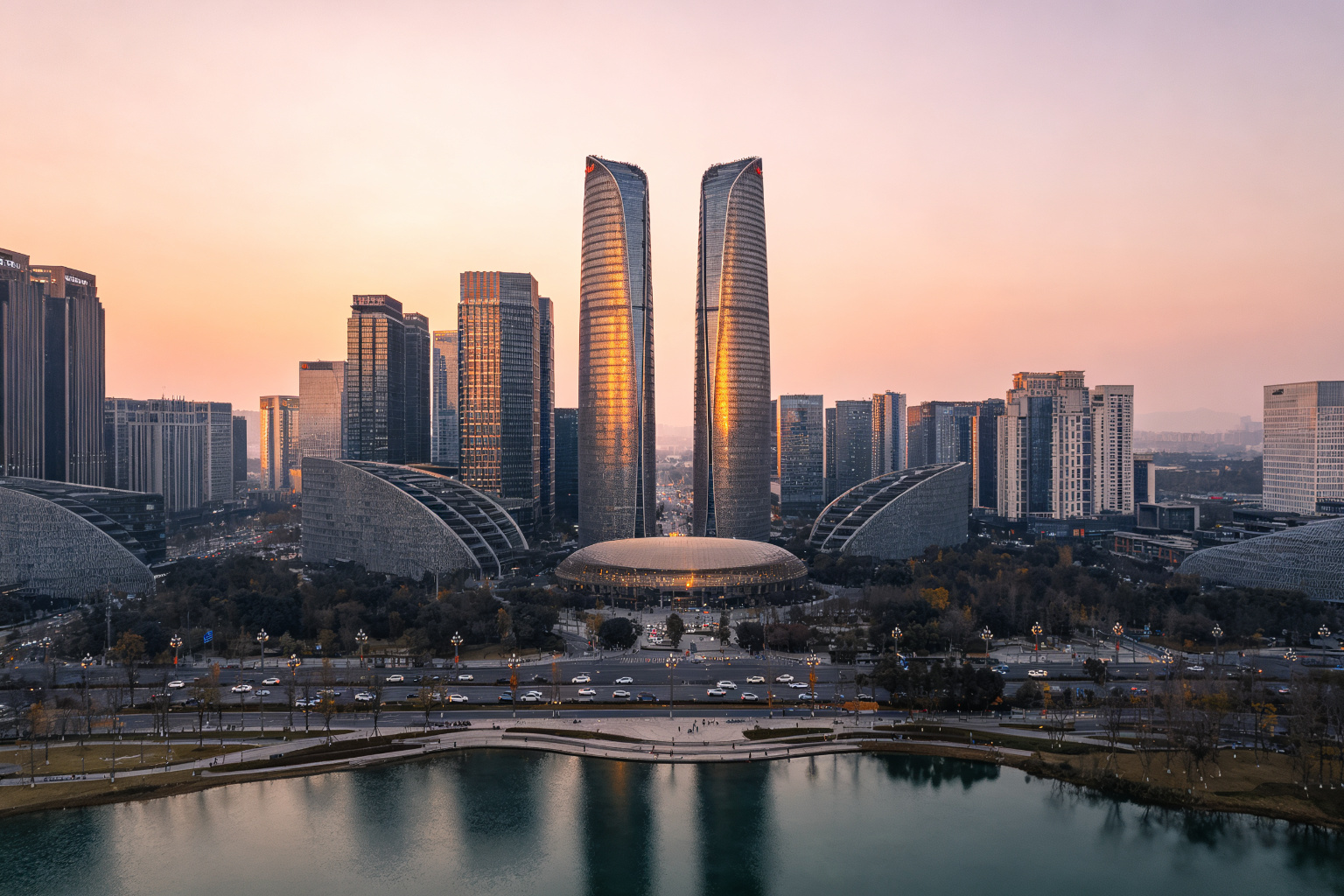
South of the old city, across the Jinjiang River, lies Tianfu New Area (天府新区, Tiānfǔ Xīnqū), a state-level new area approved by the State Council in 2014. Planned as Chengdu's future central business district and a pilot area for inland open economy, it is where the city's tallest skyscrapers, headquarters buildings and smart-city experiments now rise. Covering more than 1,500 square kilometres across parts of Wuhou, Shuangliu, Longquanyi and Jianyang, Tianfu New Area is the address most foreign investors hear about first when they ask what Chengdu has to offer.
The district is organised around the Tianfu Green Heart, a vast ecological park at its centre, with commercial clusters radiating outwards. The twin-tower financial landmark on Jiaozi Avenue and the nearby Chengdu Natural History Museum have become the postcard of 21st-century Chengdu. For business visitors, Tianfu New Area is where headquarters functions, cross-border finance, the new energy vehicle supply chain and digital-economy start-ups are concentrated.
Key industries
- Digital economy and software: cloud computing, big data, artificial intelligence and industrial internet platforms.
- Headquarters economy: regional headquarters of Fortune 500 companies, Chinese listed groups and regional banks.
- Modern finance: cross-border RMB settlement, fintech pilot institutions and financial leasing.
- New energy and intelligent connected vehicles: design, R&D and supporting services for the EV supply chain.
- Conference and exhibition: the Western China International Expo City, one of the largest convention complexes in western China.
Practical Information
- Address: core area along Jiaozi Avenue (交子大道) and Tianyuan Avenue (天府大道), south Chengdu.
- Transport: Metro Line 1 runs directly south to Tianfu Square, China New Town and Tianfu Park; Line 6 and Line 18 connect the expo city and the science city. The metro ride from central Chunxi Road takes 35 to 50 minutes.
- Opening Hours: office towers and malls are open roughly 09:00-22:00; government service halls typically 09:00-17:00 on weekdays.
- Cost: lunch at a business-mall food court is around ¥45-80 per person; a business set in a tower restaurant is ¥120-250.
- Tips: use the metro during rush hour (08:00-09:30 and 17:30-19:30), as the roads can be congested. English signage is common in major towers; smaller offices still rely on Chinese.
For foreign business visitors
Tianfu New Area is still filling out. Some streets feel quieter than Guangzhou or Shanghai, but rents per square metre are materially lower, and commuting times remain reasonable. Most foreign chambers of commerce and several consulates have shifted functions here. Bring a translator or bilingual colleague for site visits, and confirm addresses by pinyin, because older taxi drivers may not recognise English names.
Living and working in the area
Tianfu New Area is no longer just a construction site. Malls such as Jiaozi Paradise Walk and the Sino-Ocean Taikoo Li extension give the area credible dining and weekend-leisure options, and international school shuttle buses now circulate on Tianfu Avenue. That said, many expatriates still choose to live in central Chengdu and commute south, because the new area feels quiet after 20:00. For a quick first impression, ride Metro Line 1 from Chunxi Road all the way to Tianfu Park and watch the urban fabric unfold from old town to new core. If you are considering a regional headquarters, budget two to three site visits before signing a lease: parking, fibre-optic connectivity and nearby serviced apartments are the variables that change most between towers.