Around every corner in Chengdu you will see a green, red, or branded sign for a pharmacy (药店, yàodiàn). China has one of the densest pharmacy networks in the world, and most everyday medicines are easy to buy without a prescription. Knowing how to read a Chinese pharmacy - and how to find one open at 2 a.m. - makes travel much easier.
This guide explains the layout, what you can and cannot buy freely, and how to ask for what you need. It is general information, not medical advice: if you are unsure about a drug, your symptoms, or a possible interaction with your own medicine, ask a pharmacist or doctor. Do not exceed recommended doses.
What You Will Find in a Pharmacy
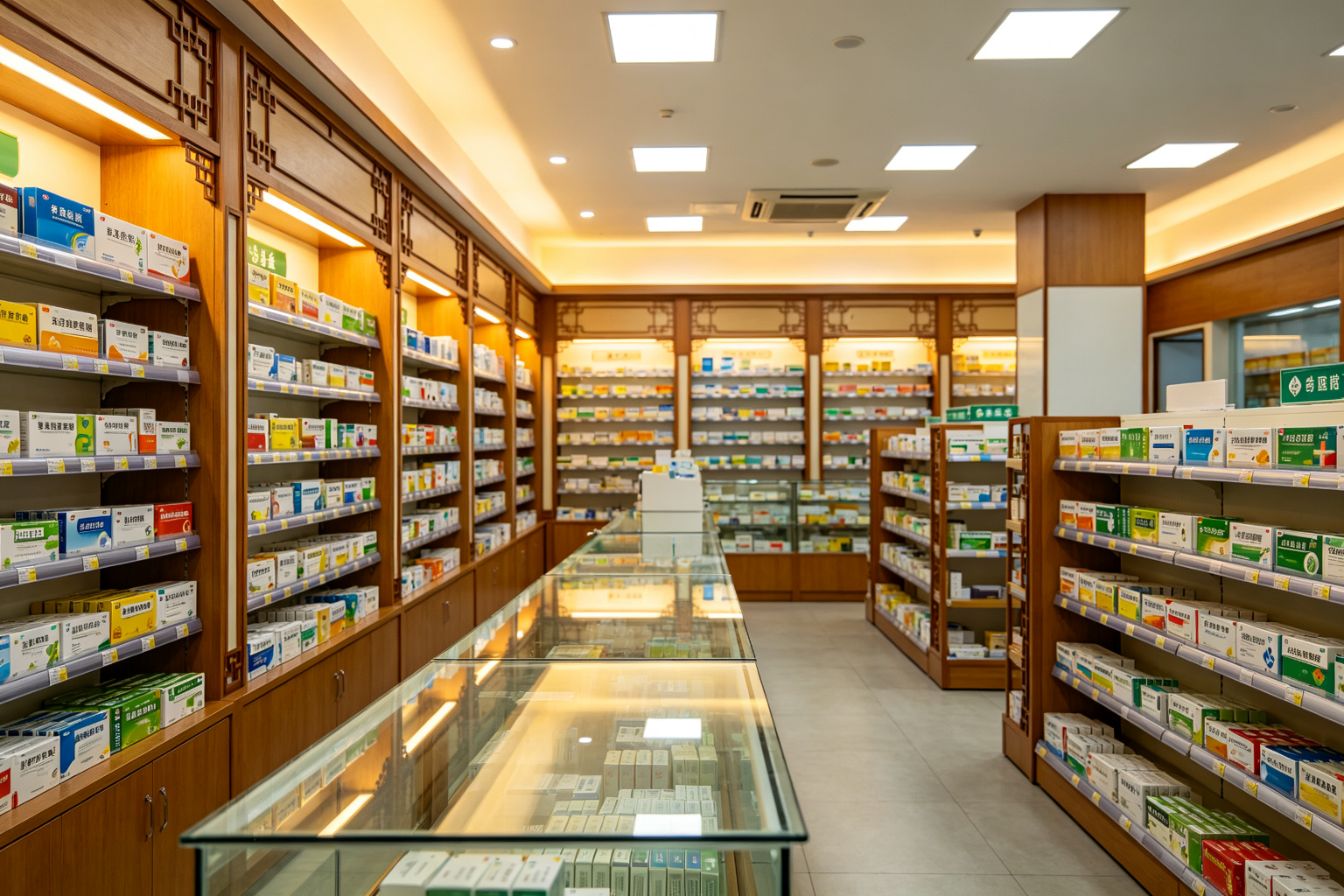
A typical Chinese pharmacy sells three broad groups of products:
- Over-the-counter (OTC) medicines: Cold and flu remedies, pain relievers, antacids, allergy pills, cough syrup, bandages, thermometers, and basic first-aid items. These are usually on open shelves.
- Traditional Chinese medicine (TCM) products: Herbal teas, cough syrups, plasters, and familiar remedies for colds, digestion, and sore muscles. Many are combination formulas.
- Prescription medicines: Antibiotics, strong painkillers, and chronic-disease drugs kept behind the counter. In China, antibiotics and other prescription drugs generally require a doctor's prescription (处方, chǔfāng) to buy, and pharmacies are supposed to ask for it.
Many pharmacies also carry baby supplies, feminine products, basic cosmetics, vitamins, and medical devices like blood pressure monitors.
How to Buy Medicines
Walk in, describe what you need, and the pharmacist (药师, yàoshī) will help. Tips for a smooth visit:
- Bring the package: If you normally take a specific brand, show a photo or the box. Generic equivalents may have different names.
- Describe symptoms simply: "I have a headache" (我头疼, wǒ tóuténg), "runny nose" (流鼻涕, liú bítì), "stomach ache" (肚子疼, dùzi téng).
- Read the label: Look for the OTC mark (a red or green "OTC" logo). Check the dose instructions on the box. If you cannot read Chinese, ask the pharmacist to write the dose on your phone.
- Watch for combination cold medicines: Chinese cold remedies often mix several ingredients; avoid stacking them with your own painkillers to prevent overdose.
- Ask about duplicates: Tell the pharmacist what you are already taking so they do not sell you something with the same active ingredient.
Practical Information
- Where to find them: Pharmacies are on nearly every major street, in shopping malls, and near hospitals. Look for the glowing "药店" sign or chain names such as 同仁堂 (Tóngréntáng) for TCM and 海王 / 大参林 / 益丰 type chains for general medicines.
- 24-hour pharmacies: Many urban pharmacies keep a window open through the night even when the main shop closes; look for a "24小时" (24 hours) sign or a lit after-hours service window. Near major hospitals you will usually find a late-night option.
- Opening hours: Most pharmacies open early morning to late evening; 24-hour outlets vary.
- Cost: Common OTC medicines are very affordable; a basic cold or painkiller course often costs only a few to a couple dozen yuan. Prices vary by brand, so compare.
- Tips: Keep the box and receipt. If you have a known condition or take prescription drugs, bring a translated list. If symptoms do not improve, worsen, or include fever, rash, or breathing trouble, see a doctor rather than self-medicating.