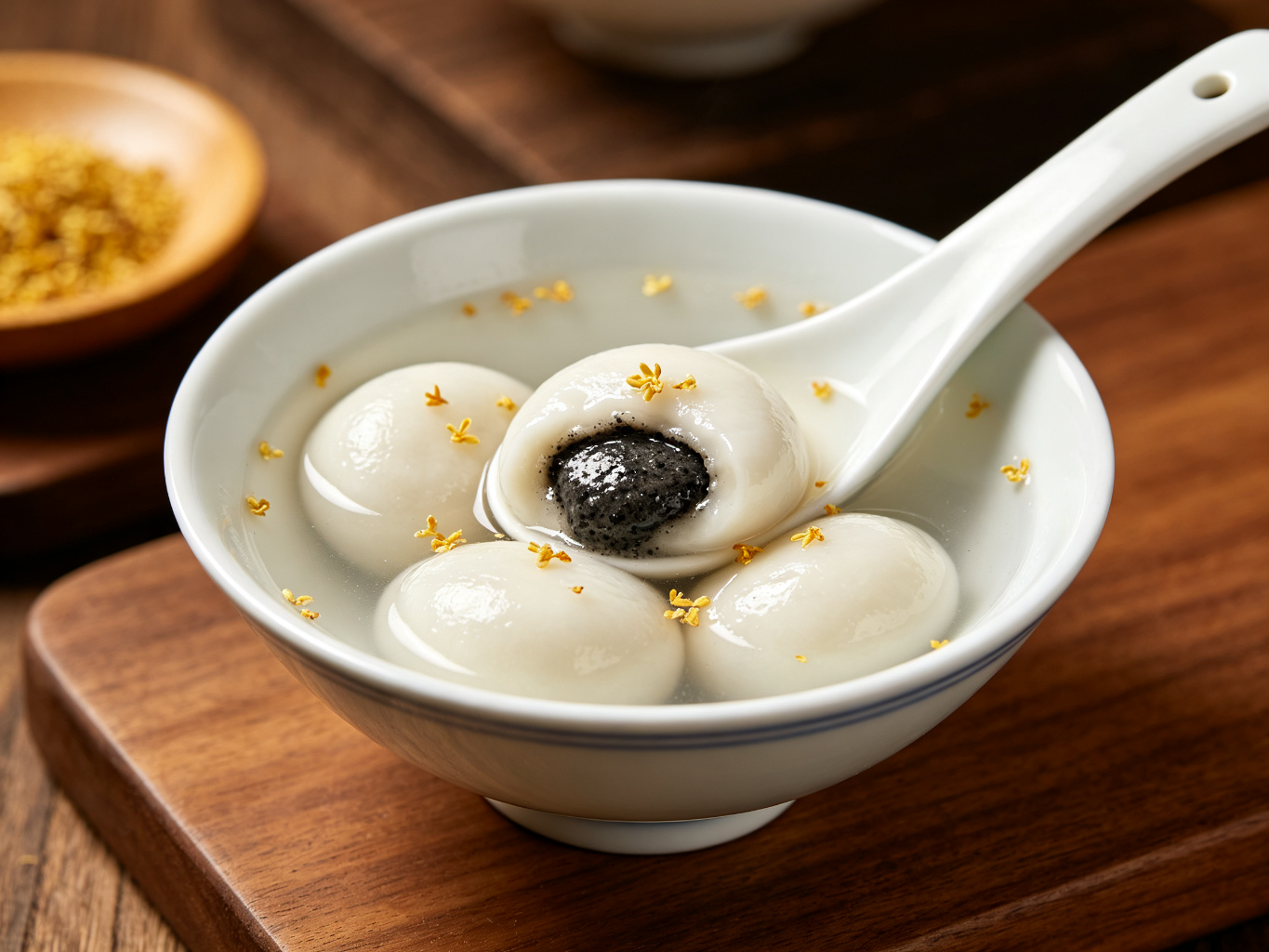
Lai tangyuan (赖汤圆, lài tāngyuán) is the signature sweet of Chengdu, created in the 1890s by a street vendor named Lai Yuanxing. He sold small glutinous rice balls from a shoulder pole near old Chengdu's east gate, perfecting a wrapper so smooth it would not crack even after a long boil. By the 1930s his stall had become a famous shop; locals still refer to any good sweet dumpling as a lai tangyuan. Unlike southern tangyuan eaten during Lunar New Year, the Chengdu version is a year-round dessert, loved hot in winter and iced in summer.
Inside the ball
The wrapper is made from milled glutinous rice, kneaded until silky. The fillings are pure, rich and almost runny when hot: black sesame (黑芝麻, hēizhīmá) mixed with lard and sugar, crushed peanut (花生, huāshēng), or smooth red bean paste (红豆沙, hóngdòushā). The balls are served in clear, light ginger-sugar syrup, never heavily sweet. One bite bursts the warm paste onto your tongue — a dramatic contrast to the chewy outside.
Ordering and pairing
Order a mixed platter (五味, wǔwèi, five flavors) to sample. A small bowl of six balls is enough for one person; two is generous. Pair with a cup of green tea to cut the sweetness. Locals often finish a spicy hot pot meal with a bowl of tangyuan to reset the palate.
Practical Information
- Address: Lai Tangyuan (赖汤圆总店) on Zhongjie Road near the Cultural Palace; branches across the old town, especially near Jinli and Kuanzhai Alley.
- Transport: Metro Line 2 to Tonghuilin or People's Park; walk south into the old lanes.
- Opening Hours: around 09:00–21:00.
- Cost: ¥15–28 per bowl; a mixed platter ¥28–45.
- Tips: ask for it served hot (热, rè) in winter; iced (冰, bīng) in summer. Let the ball cool 3 seconds before biting or the filling will burn you.
Foreign diner tips
This dessert is mild and sweet, ideal for anyone who cannot handle Sichuan spice. The lard in the filling gives it a rich finish; if you are strictly vegetarian, ask for the red-bean version, which is usually plant-based. It is a great palate reset after a fiery lunch.
Pairings, Drinks and Table Etiquette
Chengdu meals almost always begin with tea. A pot of strong green tea (绿茶, lǜchá) or jasmine tea (茉莉花茶, mòlìhuāchá) clears the palate between spicy bites. Locals also order cold Yanjing beer (燕京啤酒, Yānjīng píjiǔ) or sugarcane juice (甘蔗汁, gānzhezhī) to round out the heat. When the bill arrives, watch how locals pay: the person who organized the meal usually insists, and gentle pushing of the receipt back and forth is part of the ritual, not a quarrel. If you are a guest, let your host pay; if you invited, claim the bill with a smile. Always wipe your chopsticks on the hot towel (热手巾, rè shǒujīn) before eating, and never plant chopsticks upright in the rice bowl—it resembles incense offered to the dead. If a dish is too spicy, do not reach for water; ask for the free iced sour-plum drink (酸梅汤, suānméitāng) or a bowl of plain rice. Chengdu is informal by Chinese standards: slurping, loud chatter and second helpings are all signs of a happy table.