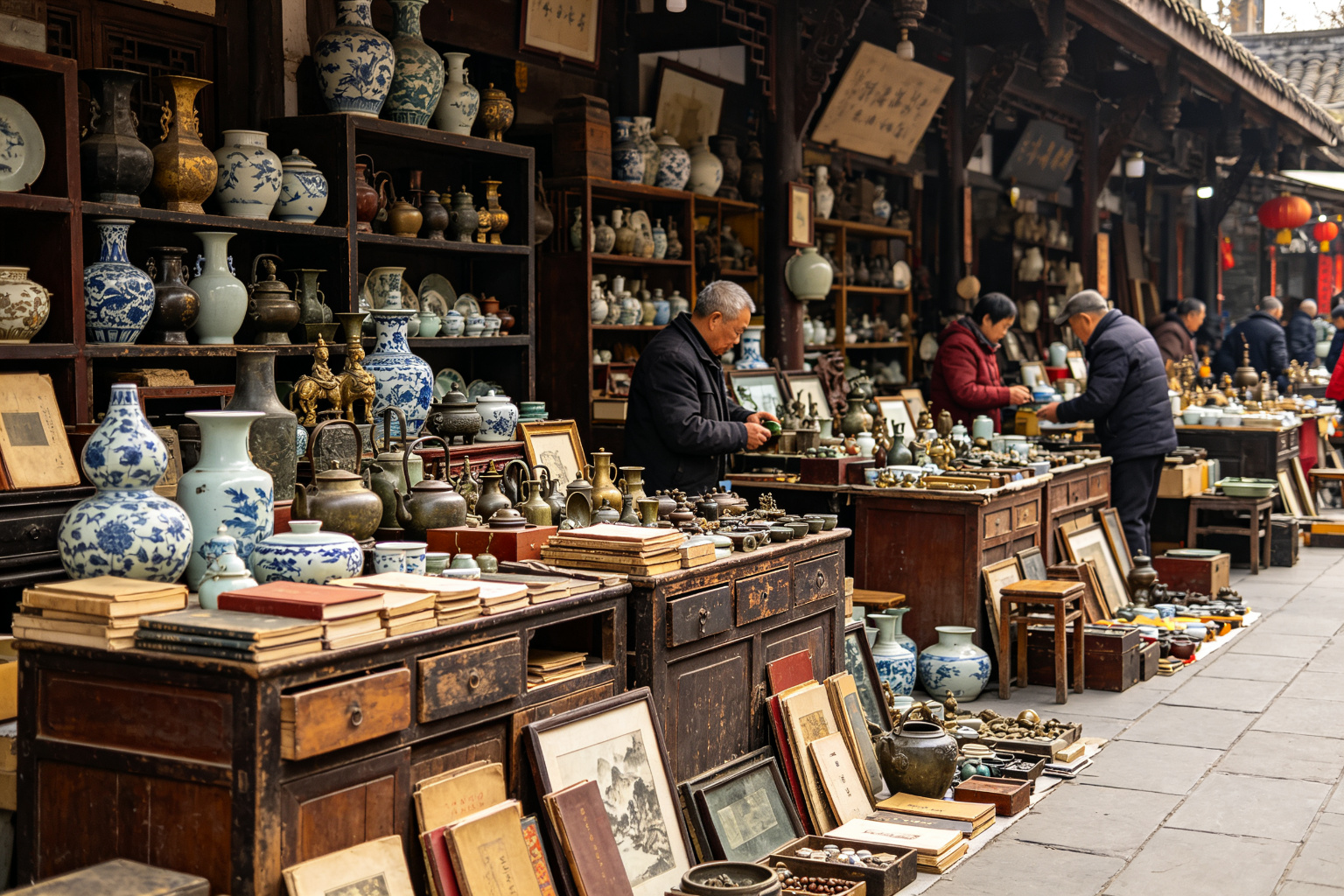
Songxianqiao Antique Market (送仙桥古玩市场, Sòngxiānqiáo Gǔwán Shìchǎng) sits on the banks of the Jin River in the west of Chengdu, near the Qingyang Palace and the Sichuan Museum. It is the largest and most established antique and curio market in southwest China, a 30,000-square-meter warren of two-story old-style shop buildings and open-air weekend stalls that has operated in some form since the 1980s. Locals call it simply "Songxianqiao," and it is where the city's collectors, dealers and curious visitors have come for decades to buy, sell or simply browse old porcelain, bronze, jade, calligraphy, old books and curious objects from Sichuan's turbulent past.
The market is split into two worlds. Inside the permanent shops, dealers sell established stock with prices and certificates; the serious collector territory. Outside, on weekend mornings, hundreds of temporary stalls spread along the riverbank, where anything from a Qing-dynasty teacup to a 1980s Mao badge can change hands for a few dozen yuan. This is where you find the real treasure hunt: items are unauthenticated, prices are made on the spot, and bargaining is the whole point of the morning.
What to look for
- Sichuan porcelain: blue-and-white bowls from the late Qing and Republic era; prices start ¥50 for a good modern copy, ¥500+ for a plausible antique.
- Old books and calligraphy: thread-bound books, old scrolls, calligraphy brushes and ink stones.
- Bronze and silver: small ornaments, old locks, opium weights and Republic-era coins.
- Jade and semi-precious stones: mainly modern and treated; buy only from shops willing to give a certificate.
- Mao-era memorabilia: badges, posters, old photographs and propaganda prints, ¥10–200.
If you are not a collector, treat the morning as a cultural stroll: drink tea at one of the riverside stalls, watch the old men play Chinese chess, and buy a small souvenir you genuinely like rather than a supposed antique.
Practical Information
- Address: Songxianqiao West Street, Qingyang District (青羊区送仙桥西街), on the Jin River west of Qingyang Palace.
- Transport: Metro Line 2 to Tianfu Square, then bus 19 or 35 to Songxianqiao stop; or a 15-minute taxi from Chunxi Road.
- Opening Hours: permanent shops 09:30–18:00 daily; weekend open-air stalls Saturday and Sunday 07:00–12:00, best before 10:00.
- Price level: budget to mid; small items ¥10–100, good porcelain ¥200–2,000, serious antiques ¥5,000+.
- Payment: cash preferred at outdoor stalls; Alipay accepted at permanent shops.
- Tips: never pay the asking price on the first offer; expect to offer 30–50 percent of the sticker and negotiate up.
Foreign visitor tips
Almost nothing sold here is guaranteed antique; even the permanent shops sell a mix of old and new. If you want a real antique, hire an appraiser through a local hotel concierge and expect to pay several thousand yuan. For a casual visitor, buy what you find beautiful, not what a dealer tells you is rare. Customs rules restrict export of any object older than 1949; if you do buy something genuinely old, ask the dealer for an export certificate or you may have to surrender it at the airport. Bargaining is part of the fun; smile, hold the item, and walk away if the price is too high. Most dealers will call you back.