UNESCO named Chengdu a City of Gastronomy in 2010, and the city has treated the title as a license to party ever since. Food is not a side activity here; it is the entertainment calendar. From crayfish season to international hot pot conventions, there is usually a meal-themed reason to be outside.
Spring and early summer: noodles and tea snacks
Spring arrives with seasonal vegetable banquets. Restaurants serve wild bamboo shoots, spring tea tea snacks and the first batches of yuxiang fish-flavored dishes. The Jinli Spring Food Fair in March combines folk performances with stalls selling cold noodles, rabbit head snacks and sweet glazed rice balls.
Summer: crayfish and cold-noodle season
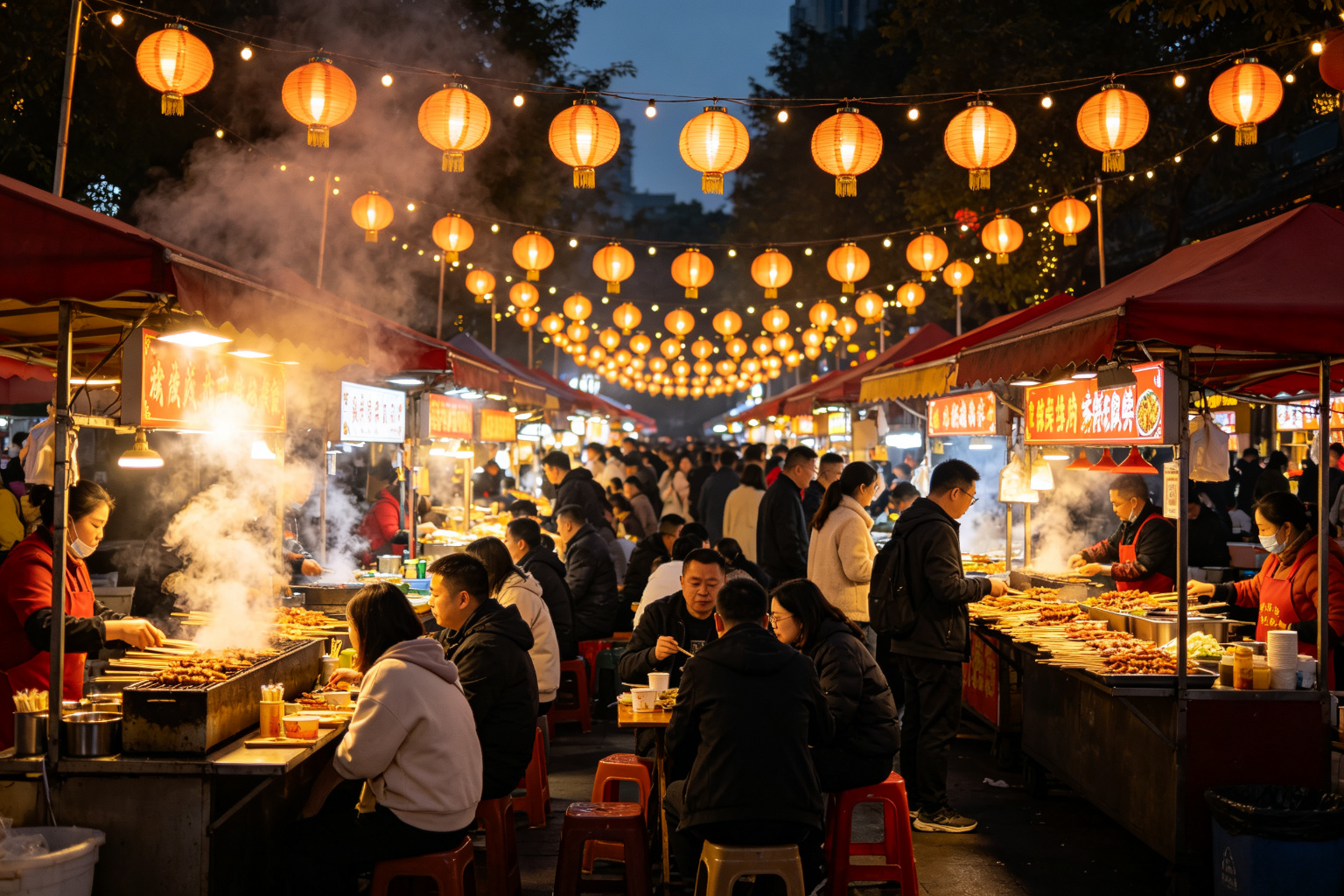
June through August is the most social food season. Outdoor tables fill every evening along Yulin, Kehua Road and near Jiuyan Bridge. Crayfish (xiǎolóngxiā) restaurants compete in "eat-all-you-can" nights, and Sichuan cold noodles (liángmiàn) appear on every street. The Chengdu International Food Festival usually takes place between June and August across multiple districts, with cooking shows, chef demonstrations and international pavilions.
Autumn: hot pot and chili festivals
As temperatures drop, hot pot season begins. Chains run anniversary promotions and street-side outdoor hot pot tables reopen. The Chengdu Hot Pot Festival gathers the biggest brands in one venue, where visitors compare broths, chili oils and dipping sauces. Around the same time, the annual Sichuan Cuisine Festival showcases both classic and creative dishes, including the increasingly trendy new-Sichuan cooking that young chefs are famous for.
Winter: cured meats and tangyuan
By December, every balcony hangs sausages and cured pork. Lantern Festival (February) brings sweet tangyuan rice balls, and New Year eve banquets are booked months in advance.
Practical Information
- Where to look: Official Chengdu food bureau WeChat accounts, Time Out Chengdu, and local event pages.
- Typical costs: Street-food tasting evenings ¥50-100; festival tickets ¥30-100; hot pot dinner ¥100-180 per person.
- Spice tolerance: Ask for budùlà (not spicy) if you cannot handle chili; restaurants will happily adjust.
- Vegetarian: Buddhist vegetarian restaurants near Wenshu Monastery serve excellent meat-free Sichuan dishes.
- Tips: Go with a local friend or join a food tour — half the joy is ordering 20 dishes and sharing.
Ordering Sichuan Food Without Overwhelming Yourself
Sichuan cuisine is not just numbing heat. A standard meal builds on doubanjiang broad bean paste, fermented vegetables, Sichuan pepper, and garlic. Classics to try once you adjust: kung pao chicken, mapo tofu, twice-cooked pork, smoked tea duck, dan dan noodles, and boiled fish in chili oil. If heat is a concern, ask for bu la (not spicy) or sha la (light spicy). Banquets are shared, so order two dishes per diner and add soup and rice.
- Order half portions at big-chain restaurants; full plates are generous.
- Vegetarian diners can ask for su cai (vegetarian); Buddhist temples near Wenshu Monastery do excellent vegetarian feasts.
- Tea houses serve small snacks all afternoon; try pengbing (mung bean pastry) and sunflower seeds.
- Night markets along Yulin and Kehua Road are open until midnight in summer.
- Tip your server nothing; the bill is final.
Budgeting a Food Trip
A street-food night can cost as little as 40 yuan per person, while a table at a well-known hot pot house runs 150 to 250. Street stalls near universities offer the best value: cold noodles, skewered meats, grilled eggplant, and sweet potato noodles. Restaurant tax is already in the menu price, and there is no service charge. If you travel with a friend, splitting three dishes and a rice pot is the most efficient way to sample Sichuan flavors without waste.
- Bring small bills; street stalls rarely make change for a 100-yuan note.
- Busy stalls with queues of locals are usually the best value.
- Drink barley tea or sour plum juice; both cool the palate better than beer.
- Try a bite before adding more chili oil at the table.
- Keep wet wipes in your bag; many street stalls lack napkins.