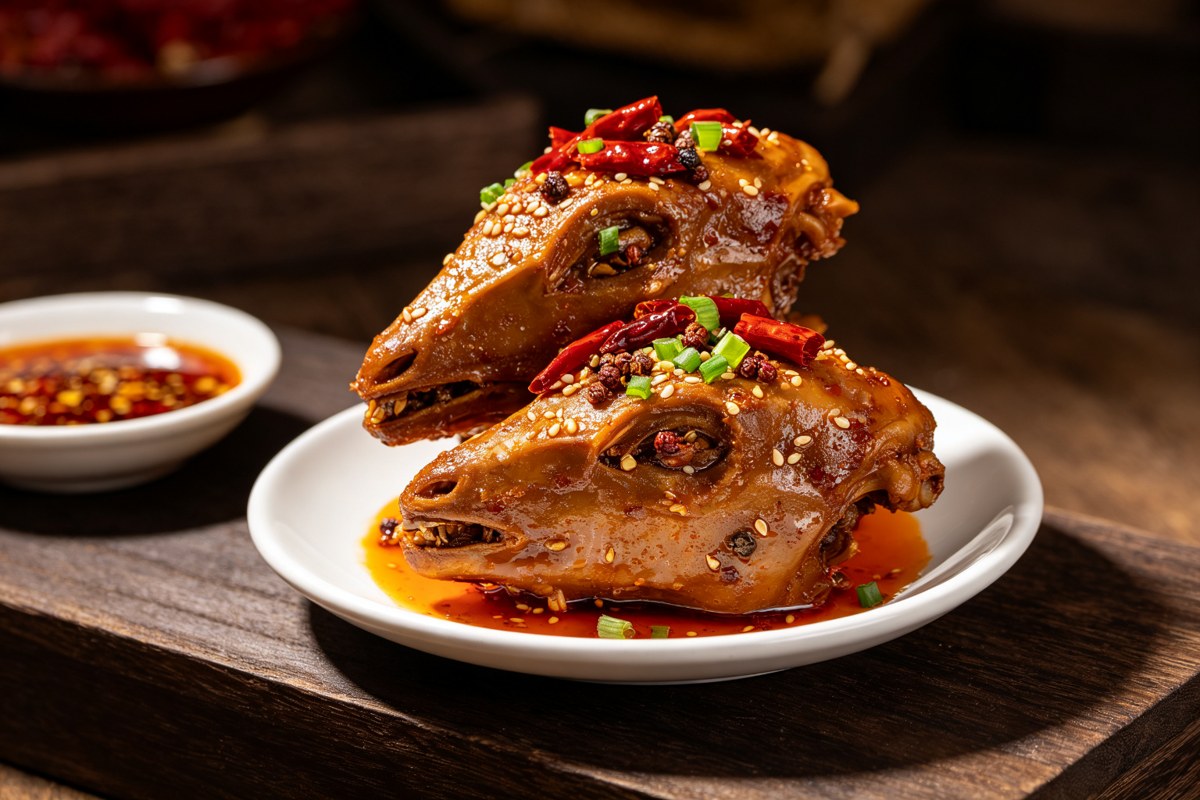
Spicy rabbit heads (老妈兔头, lǎomā tùtóu) are the most controversial Chengdu snack. The city eats more rabbit than almost anywhere else in China, mostly in the form of slow-braised rabbit heads, a specialty of Shuangliu District south of downtown. The famous chain Shuangliu Lao Ma Tutou (双流老妈兔头) has been selling them since the 1990s, and locals buy them by the bag to take home, to the cinema or on long train trips. If you can get past the appearance, the reward is some of the most deeply flavored meat in Sichuan.
How to eat it
Each head is braised for hours in a master stock of soy, rock sugar, ginger, star anise, cassia, chili and Sichuan pepper, then finished in a wok with fresh chili oil and sesame. The meat is dark, fragrant and tender. To eat: hold the head with both hands, crack the jaw with your fingers, and work your way through cheek meat, the tiny tongue, brain and eye socket. Yes, the brain is the delicacy — soft, savory and rich. Two flavors dominate: spicy (麻辣, málà) and five-spice (五香, wǔxiāng) for the faint-hearted.
Practical Information
- Address: the original Shuangliu Lao Ma Tutou (双流老妈兔头) on Beisen Road, Shuangliu District; branches in Chengdu include stores near Chunxi Road and Kuanzhai Alley.
- Transport: take Metro Line 3 to Shuangliu Square, then a short taxi to the original shop; downtown branches are easier for most visitors.
- Opening Hours: around 10:00–22:00; bags to go are sold all day.
- Cost: ¥12–18 per head; a bag of four is ¥50–70. Most visitors order two.
- Tips: order five-spice first if you are nervous. Ask for disposable gloves (一次性手套) and wet wipes. Pair with cold beer or iced sour plum drink.
Foreign diner tips
This is the dish that separates tourists from converts. If the sight of a whole head on a plate bothers you, ask for it takeaway and eat at a table; most visitors report it is easier than it looks. If you are uncomfortable, local alternatives include rabbit ribs (兔排, tùpái) and rabbit legs (兔腿, tùtuǐ), which are braised in the same stock but look normal. Even if you skip the head, the experience of ordering and watching locals enjoy it is a Chengdu memory.
Pairings, Drinks and Table Etiquette
Chengdu meals almost always begin with tea. A pot of strong green tea (绿茶, lǜchá) or jasmine tea (茉莉花茶, mòlìhuāchá) clears the palate between spicy bites. Locals also order cold Yanjing beer (燕京啤酒, Yānjīng píjiǔ) or sugarcane juice (甘蔗汁, gānzhezhī) to round out the heat. When the bill arrives, watch how locals pay: the person who organized the meal usually insists, and gentle pushing of the receipt back and forth is part of the ritual, not a quarrel. If you are a guest, let your host pay; if you invited, claim the bill with a smile. Always wipe your chopsticks on the hot towel (热手巾, rè shǒujīn) before eating, and never plant chopsticks upright in the rice bowl—it resembles incense offered to the dead. If a dish is too spicy, do not reach for water; ask for the free iced sour-plum drink (酸梅汤, suānméitāng) or a bowl of plain rice. Chengdu is informal by Chinese standards: slurping, loud chatter and second helpings are all signs of a happy table.