
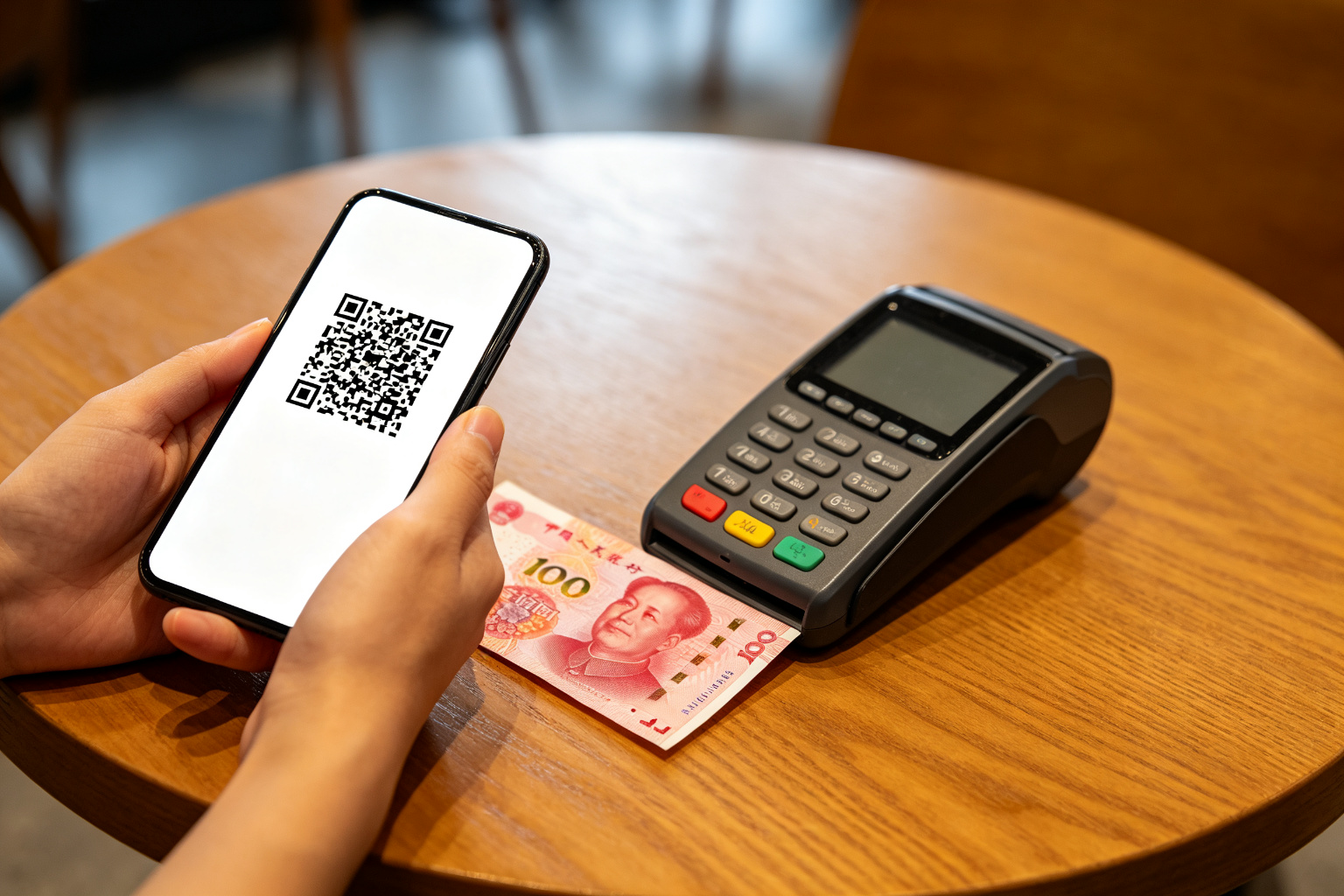
China runs on mobile payments, and Chengdu is no exception. Street food, taxis, metro tickets, convenience stores and even temple donation boxes all expect a QR code scan. Until 2023 this was frustrating for foreign visitors, because both dominant apps demanded a Chinese bank account. That has changed: WeChat Pay and Alipay now let overseas visitors link international credit and debit cards directly, opening most of the city to phone payments.
The currency: renminbi (RMB, CNY)
The official currency is the renminbi, with the unit called yuan (元, ¥). Coins come in 0.1, 0.5 and 1 yuan; banknotes in 1, 5, 10, 20, 50 and 100 yuan. As of 2025, exchange rates fluctuate around 7-8 yuan to one US dollar. Rates are best at airport counters, bank branches and large shopping malls; avoid private money changers on the street.
WeChat Pay and Alipay with foreign cards
Since 2023-2024 both super-apps support binding international cards from major brands (Visa, Mastercard, JCB, Discover and others) for small daily purchases. The process is straightforward:
- Download WeChat or Alipay before arrival.
- Open the wallet section, choose overseas card binding, and enter your card details.
- Verify identity with your passport.
- Use the in-app QR scanner at any merchant that displays either logo.
Fees and daily limits apply, and a few small vendors still cannot accept foreign-linked cards. Hotel payments and large purchases still prefer bank cards or cash.
When to use cash
Carry about ¥300-500 in small notes for:
- Tiny noodle shops and back-alley stalls that only take local QR codes.
- Taxis that do not support card payments.
- Temple donations, street performances and tips if you choose to give them.
- Backup when your phone battery dies or the network is weak.
ATMs and bank cards
ATMs at banks and metro stations accept international Visa, Mastercard, UnionPay and Cirrus cards. Withdrawal fees are usually a fixed amount plus a percentage, so take larger amounts at once. Bank branches of ICBC, Bank of China and CCB handle foreign-currency exchange during business hours.
Practical Information
- Typical prices: bowl of noodles ¥12-25, coffee ¥25-40, metro ride ¥2-7, hot pot dinner per person ¥100-180, mid-range hotel ¥350-600 per night.
- Tipping: Not expected anywhere; rounding up is fine and hotel porters may accept a small tip.
- Receipts: Ask for a fapiao (invoice) if your employer reimburses travel; this is the official tax document.
- Bargaining: Mostly at tourist markets; malls and restaurants have fixed prices.
- Tips: Keep a folded ¥100 note in your wallet and a second one in your bag; you will never regret it.
When Digital Payment Fails and What to Do
Even with foreign cards linked, expect about one shop in ten to decline your card. Street noodle stalls, old taxi drivers, and small temples are the usual holdouts. Keep a small emergency cash stash and a backup card in a different pocket. If WeChat Pay declines mid-transaction, ask the merchant to try the Alipay QR instead, or vice versa; terminals often show both logos. Hotels can issue a temporary cash advance if you run completely dry, but fees apply.
- Withdraw larger amounts from bank ATMs rather than many small fees.
- Keep a single 100-yuan note folded separately from your wallet.
- Ask your bank at home to notify them of your China trip to avoid card blocks.
- International credit cards are accepted in major hotels and department stores but rarely at markets.
- Tipping is not expected; rounding up is enough.