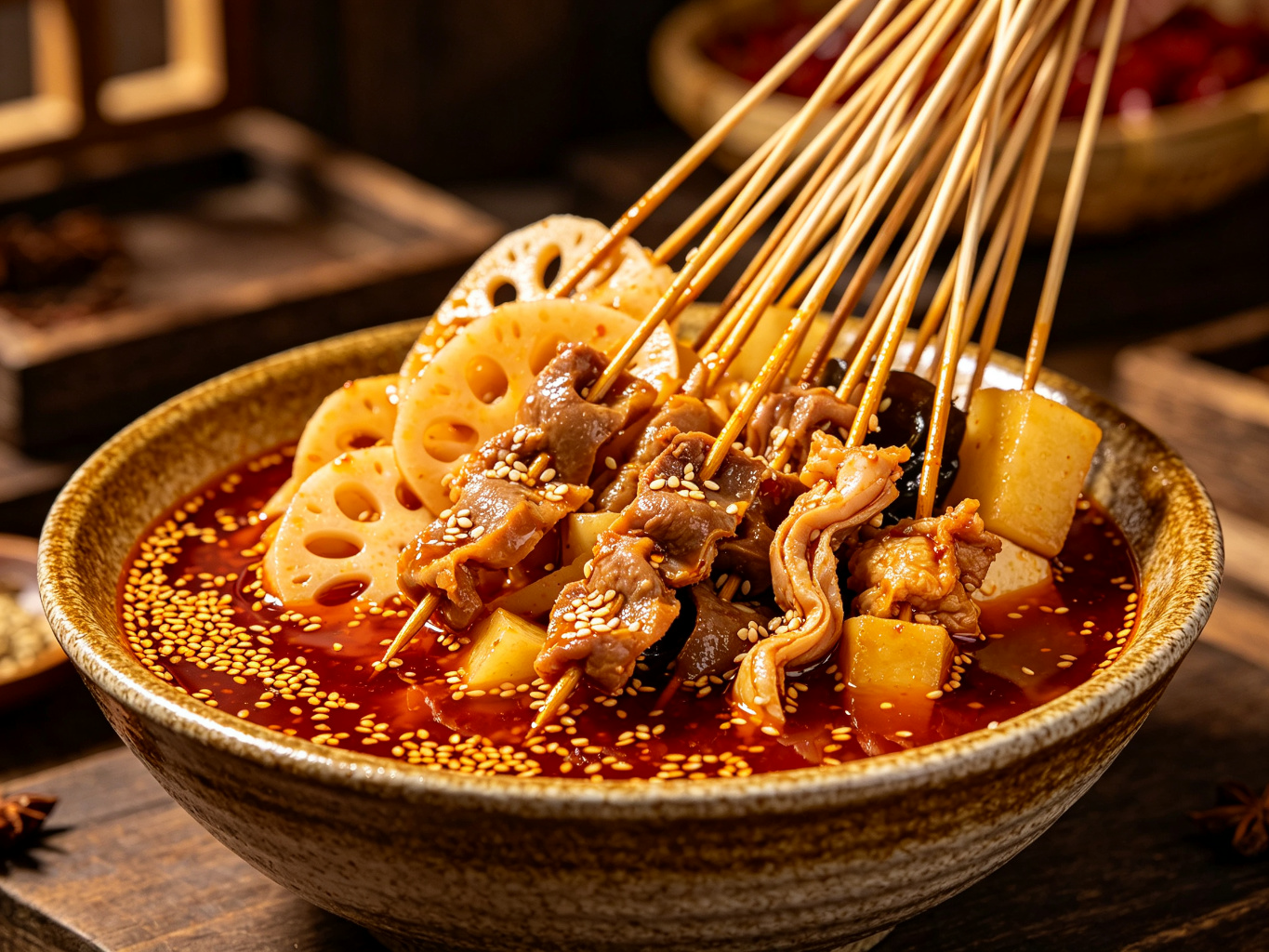
Bobo ji (钵钵鸡, bōbō jī, literally "bowl chicken") comes from Leshan, the small Sichuan city below Mount Emei, but Chengdu has adopted it as its own. Unlike hot pot, which boils, bobo ji is cold: bite-size pieces of poached chicken, offal and vegetables are threaded onto tiny bamboo skewers and soaked for hours in an aromatic broth of chicken stock, Sichuan peppercorn, chili oil and ginger. The result is served cold, in a deep ceramic bowl (the bobo), and eaten standing or seated as a street snack.
What to pick
At a bobo ji shop, a large glass jar or stainless-steel tub holds dozens of pre-soaked skewers. You pick what you want; the waiter counts the sticks at the end. Classic picks:
- 土鸡肉 tǔ jīròu — free-range chicken thigh, the reason for the name
- 鸡爪 jī zhuǎ — chicken feet, cartilage-rich and addictive
- 郡把 jùn bǎ — chicken gizzard, springy
- 土豆片 tǔdòu piàn — potato slices, soft and absorbing
- 藕片 ǒupiàn — lotus root slices, crisp
- 木耳 mù ěr — wood ear mushroom, gelatinous
- 豆皮 dòupí — tofu skin, chewy
Two broth styles dominate: red oil (红油, hóngyóu), which is spicy and numbing, and clear pepper (藤椒, téngjiāo), fragrant with green Sichuan pepper and sesame oil, milder but tingly. Order both if you can.
Practical Information
- Address: excellent bobo ji stalls cluster around Yulin West Road (玉林西路), near Sichuan University and around Jiaodi Square. Ask locals for their favorite.
- Transport: Metro Line 1 to Nijiaqiao, then a 10-minute walk into Yulin; or Line 3 to Gaoshengqiao.
- Opening Hours: most shops open 11:00–01:00 the next day; the busiest window is 17:00–21:00.
- Cost: ¥1–3 per skewer; a satisfying meal is ¥40–70 per person.
- Tips: let the skewer drip over the bowl before eating. Ask for a bowl of white rice to soak up the leftover broth.
Foreign diner tips
Bobo ji is served cold, so do not expect steam. It is one of the most approachable Sichuan street foods: the spice is aromatic rather than burning, and you control the number of skewers. Vegetarians have real choices here — potato, lotus root, mushroom and tofu skin are all excellent. Bring wet wipes; the oil on your fingers will be fragrant, not unpleasant.
Pairings, Drinks and Table Etiquette
Chengdu meals almost always begin with tea. A pot of strong green tea (绿茶, lǜchá) or jasmine tea (茉莉花茶, mòlìhuāchá) clears the palate between spicy bites. Locals also order cold Yanjing beer (燕京啤酒, Yānjīng píjiǔ) or sugarcane juice (甘蔗汁, gānzhezhī) to round out the heat. When the bill arrives, watch how locals pay: the person who organized the meal usually insists, and gentle pushing of the receipt back and forth is part of the ritual, not a quarrel. If you are a guest, let your host pay; if you invited, claim the bill with a smile. Always wipe your chopsticks on the hot towel (热手巾, rè shǒujīn) before eating, and never plant chopsticks upright in the rice bowl—it resembles incense offered to the dead. If a dish is too spicy, do not reach for water; ask for the free iced sour-plum drink (酸梅汤, suānméitāng) or a bowl of plain rice. Chengdu is informal by Chinese standards: slurping, loud chatter and second helpings are all signs of a happy table.