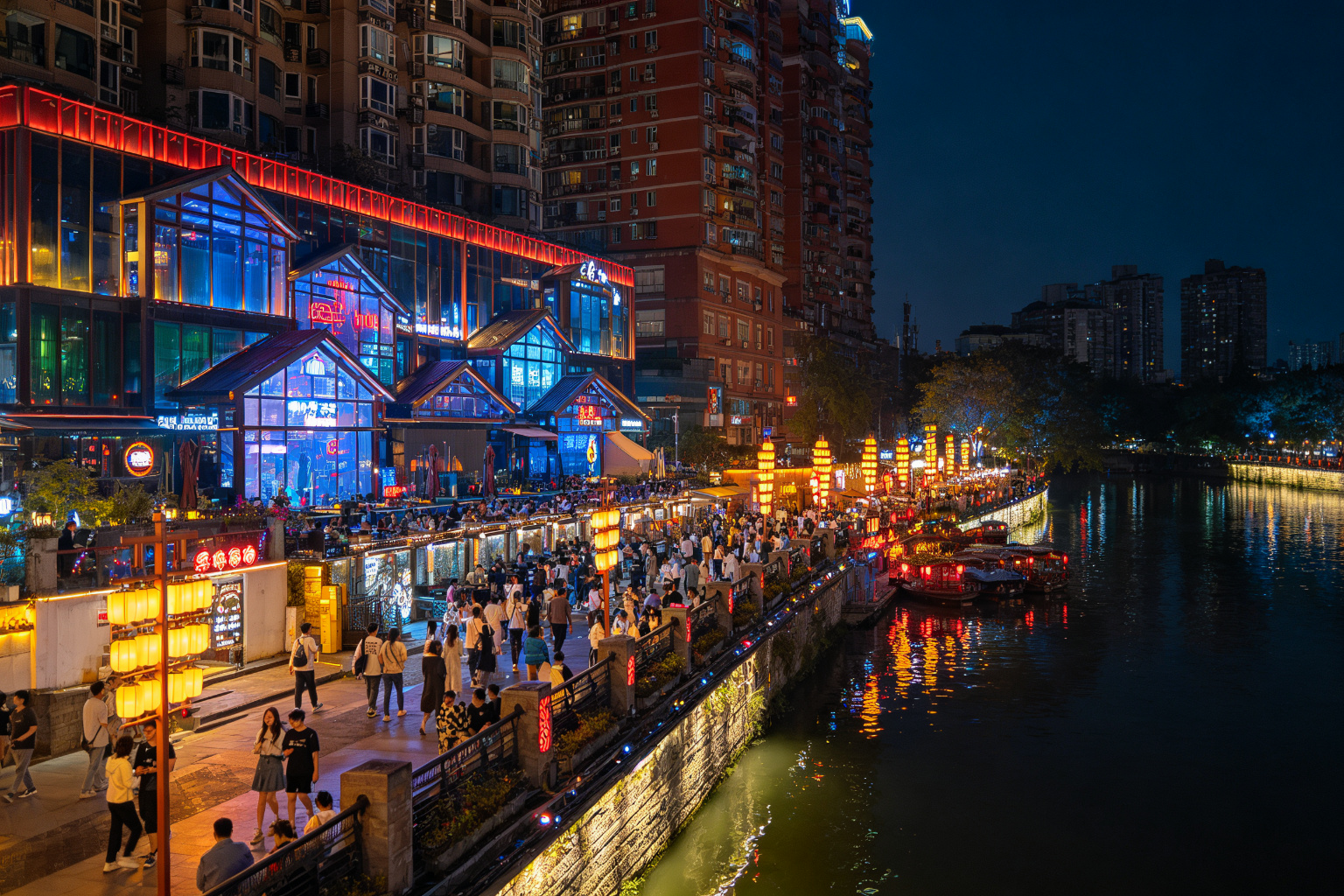
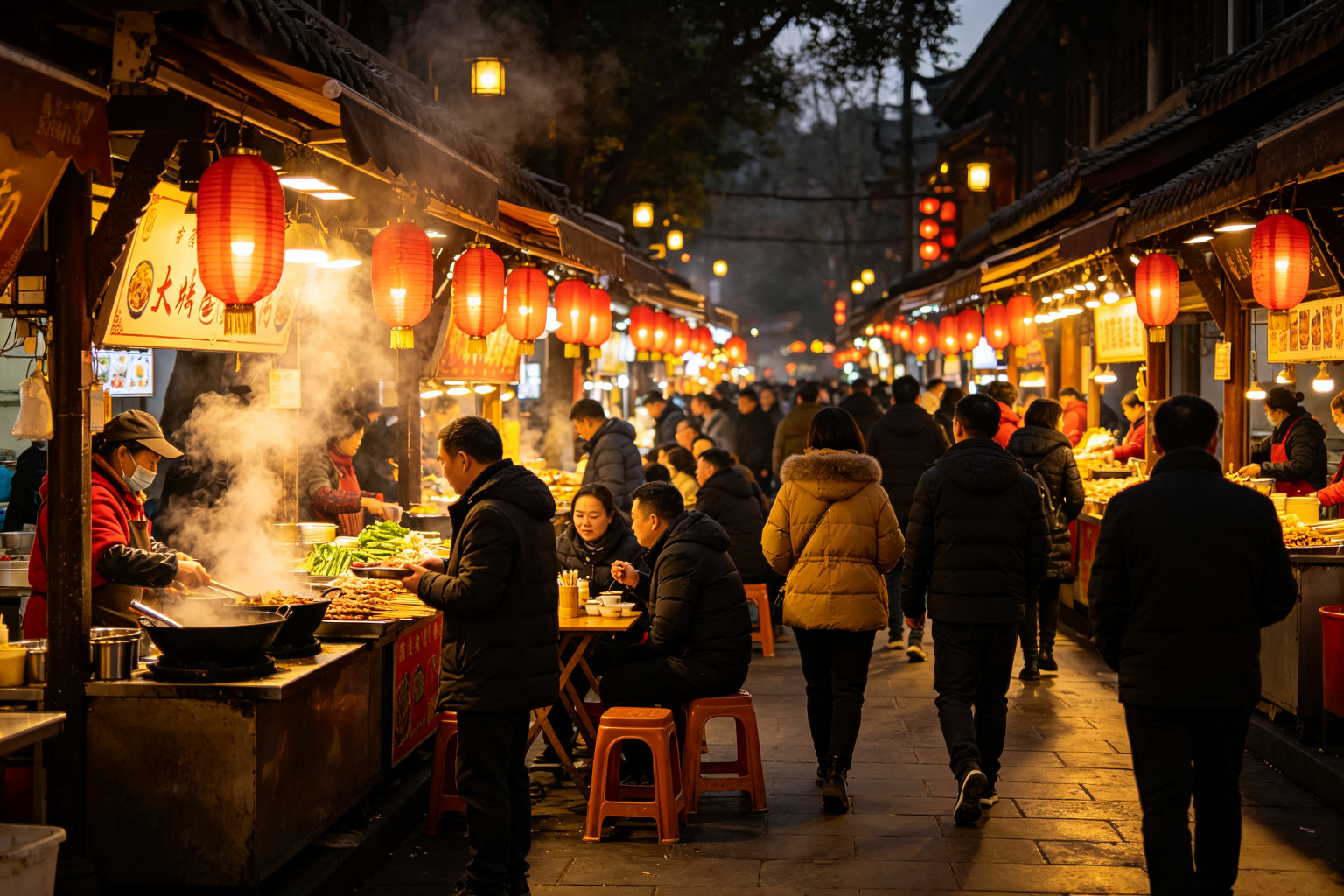
Chengdu's night markets (夜市, yèshì) are the city's unofficial dinner table. As the lights come on, streets fill with folding tables, red lanterns and clouds of chili smoke. This is where locals eat cheap, walk between stalls, and snack late into the night — and where a visitor can try a dozen Sichuan street foods for under ¥80. It is also the cheapest, most atmospheric way to eat like a Chengdu local.
The best markets for visitors
- Jianshe Road Night Market (建设路夜市, Jiànshè Lù Yèshì) — the most famous student-market, packed with grilled skewers and cold noodles near the universities; lively and slightly touristy but excellent.
- Yulin Night Market (玉林夜市) — trendy neighborhood of small stalls, late-night food and bars; good for young travelers.
- Kuanzhai Alley & Jinli night strips — prettier, tourist-leaning markets good for souvenirs, sugar art and sugar figurines, but pricier.
- Xipu / Huaxi night food streets — local, less polished, excellent for adventurous eaters; very few tourists.
- Wenshufang night strip — around the Wenshu Monastery, food plus Buddhist snacks and tea shops.
What to eat
- 烤串 kǎochuàn — grilled meat and vegetable skewers, brushed with chili and cumin; ¥2–¥5 each.
- 凉面 liángmiàn — cold noodles tossed in sesame-chili oil; ¥8–¥12 a bowl.
- 臭豆腐 chòudòufu — fermented tofu, crispy outside, creamy inside; ¥8–¥10.
- 冰粉 bīngfěn — icy jelly with brown sugar and sesame, the perfect cooling finish; ¥6–¥10.
- 蛋烘糕 dànhōnggāo — little crisp cakes filled with sweet or savory paste; a Chengdu snack classic.
Practical Information
- Location: Jianshe Road (Chenghua District), Yulin (Wuhou District), Jinli (Wuhou); markets typically start around 18:00 and peak after 20:00.
- Transport: Metro Line 6 to Jianshe Road; Line 1 to Jinli / Sichuan Gymnasium; Yulin is a short taxi from Chunxi Road (about ¥15).
- Hours: stalls operate 18:00–23:30, sometimes later on weekends; the biggest, busiest stretch is 20:00–22:00.
- Cost: budget ¥40–¥80 per person to graze across stalls; a full sit-down dinner ¥60–¥120. Share plates to try more.
- Payment: most stalls accept WeChat / Alipay; carry ¥100 cash for the smallest vendors and sugar-art stalls.
Tips for foreign guests
- Point at food and use gestures — menus are rarely in English, but vendors love curious visitors and will offer a taste.
- Spice levels run high; say 微辣 (wēilà = mild) or 不辣 (bùlà = no spice) if you cannot handle heat. Have a cold drink ready.
- Eat where the locals are queuing; the longest line is usually the best stall. Avoid stalls that look empty.
- Useful Chinese: 这个辣不辣? (Zhège là bù là? = Is this spicy?); 来一份 (Lái yī fèn = one portion please); 谢谢 (xièxiè = thank you); 多少钱 (duōshao qián = how much).
A night-market walk is the cheapest, most social dinner in Chengdu — go hungry, share plates, and order without looking at the price. Bring wet wipes, wear walking shoes, and leave room for the iced jelly at the end. If you want a calmer evening, the Jinli and Wenshufang strips are prettier and better lit for solo travelers.
How to pay and get around
Nearly every ticket, tea-house table and bar bill in Chengdu is settled by mobile: scan the QR code on the table with WeChat or Alipay, enter the amount, and confirm. If you are a short-stay visitor, ask the hotel to help bind a card, or carry around 500 yuan in small notes for old stalls, temple fairs and late taxi shares. The metro covers most venues shown here, and Didi is cheap from 22:00 when the metro closes; agree on the drop-off point before getting in. Book weekends through Dianping or Damai two to three days ahead, and keep your passport handy because many tickets are checked against the ID used at purchase. A light umbrella and comfortable shoes solve ninety percent of unexpected afternoons, and most venues listed in this guide sit within a short taxi ride of the Jinjiang or Chunxi Road hotels that first-timers usually book.