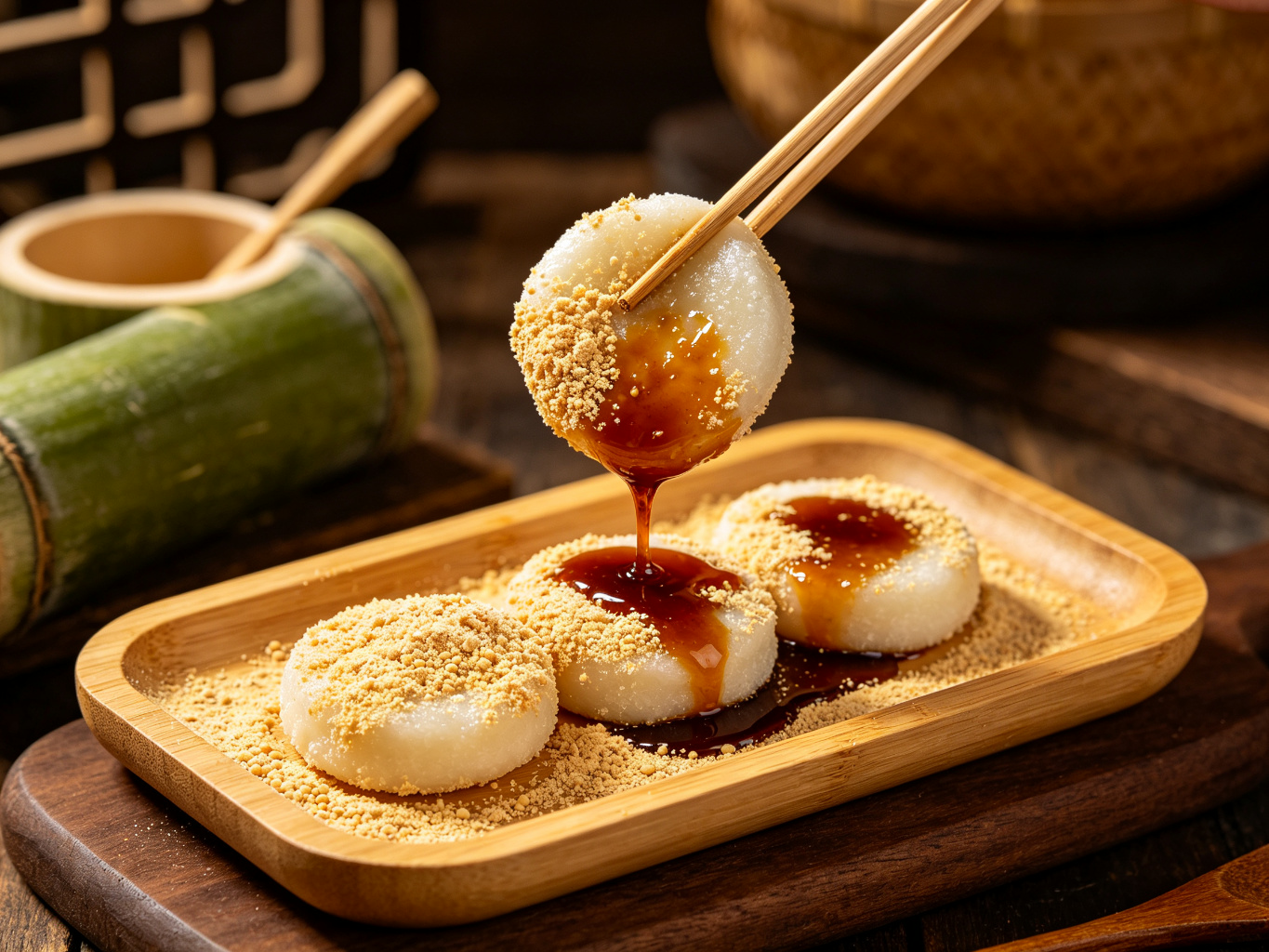
San da pao (三大炮, sān dà pào, "three big cannons") is as much a show as a dessert. It dates back to the Qing dynasty, when vendors at temple fairs would roll balls of glutinous rice dough, hurl them across a wooden board onto a tray of roasted soybean flour, and call out the resulting thud. Each launch sounded like a cannon — hence the name. Today the performance survives in tourist streets like Jinli and Kuanzhai Alley, but the snack itself remains a genuine Chengdu classic.
What it actually is
Three small glutinous rice balls are thrown onto a wooden drum, bouncing onto a large tray of roasted soybean powder, then rolled in brown sugar syrup and sprinkled with sesame. The texture is soft, chewy and slightly grainy from the roasted soy flour, while the flavor is sweet, nutty and lightly toasted. It is not heavy like a Western dessert; more like a warm, malty candy. A set usually comes with three balls on a paper tray, plus a small bowl of rice cake or a cup of tea.
Practical Information
- Address: sold by street vendors in Jinli Ancient Street (锦里古街), Kuanzhai Alley (宽窄巷子) and Wenshu Monastery (文殊院) snack lane.
- Transport: Metro Line 3 to Jinli; Line 4 to Kuanzhaixiangzi; Line 1 to Wenshuyuan.
- Opening Hours: street stalls roughly 10:00–21:00, busiest weekends and holidays.
- Cost: ¥10–20 per set; rarely more than ¥25 in tourist streets.
- Tips: watch the vendor throw the balls — that is the fun. Eat immediately; it hardens as it cools.
Foreign diner tips
This is one of the few Chengdu snacks that is 100% safe for spice haters: sweet, warm and child-friendly. It is also small, so do not expect it to replace a meal. Buy one set to share between two people, photograph the performance, then walk on to the next snack stall.
Pairings, Drinks and Table Etiquette
Chengdu meals almost always begin with tea. A pot of strong green tea (绿茶, lǜchá) or jasmine tea (茉莉花茶, mòlìhuāchá) clears the palate between spicy bites. Locals also order cold Yanjing beer (燕京啤酒, Yānjīng píjiǔ) or sugarcane juice (甘蔗汁, gānzhezhī) to round out the heat. When the bill arrives, watch how locals pay: the person who organized the meal usually insists, and gentle pushing of the receipt back and forth is part of the ritual, not a quarrel. If you are a guest, let your host pay; if you invited, claim the bill with a smile. Always wipe your chopsticks on the hot towel (热手巾, rè shǒujīn) before eating, and never plant chopsticks upright in the rice bowl—it resembles incense offered to the dead. If a dish is too spicy, do not reach for water; ask for the free iced sour-plum drink (酸梅汤, suānméitāng) or a bowl of plain rice. Chengdu is informal by Chinese standards: slurping, loud chatter and second helpings are all signs of a happy table.
A Few More Words Before You Go
If you are ordering alone, ask for a half portion (半份, bànfèn) of anything heavy on chili oil; most shops will agree. Look for places where local families are already eating—if the tables are full of grandparents and students, the price is fair and the kitchen has been trusted for years. In summer, sit outside under the red lanterns; in winter, ask for a window seat where the steam from the pot reaches you. Bring cash or a phone with WeChat Pay or Alipay set up; very few small stalls take foreign cards. Tip generously if a server has walked you through the menu, but tipping is not expected at street stalls. Take your time: Chengdu meals are meant to stretch into the evening, and rushing out after twenty minutes is considered a pity.